

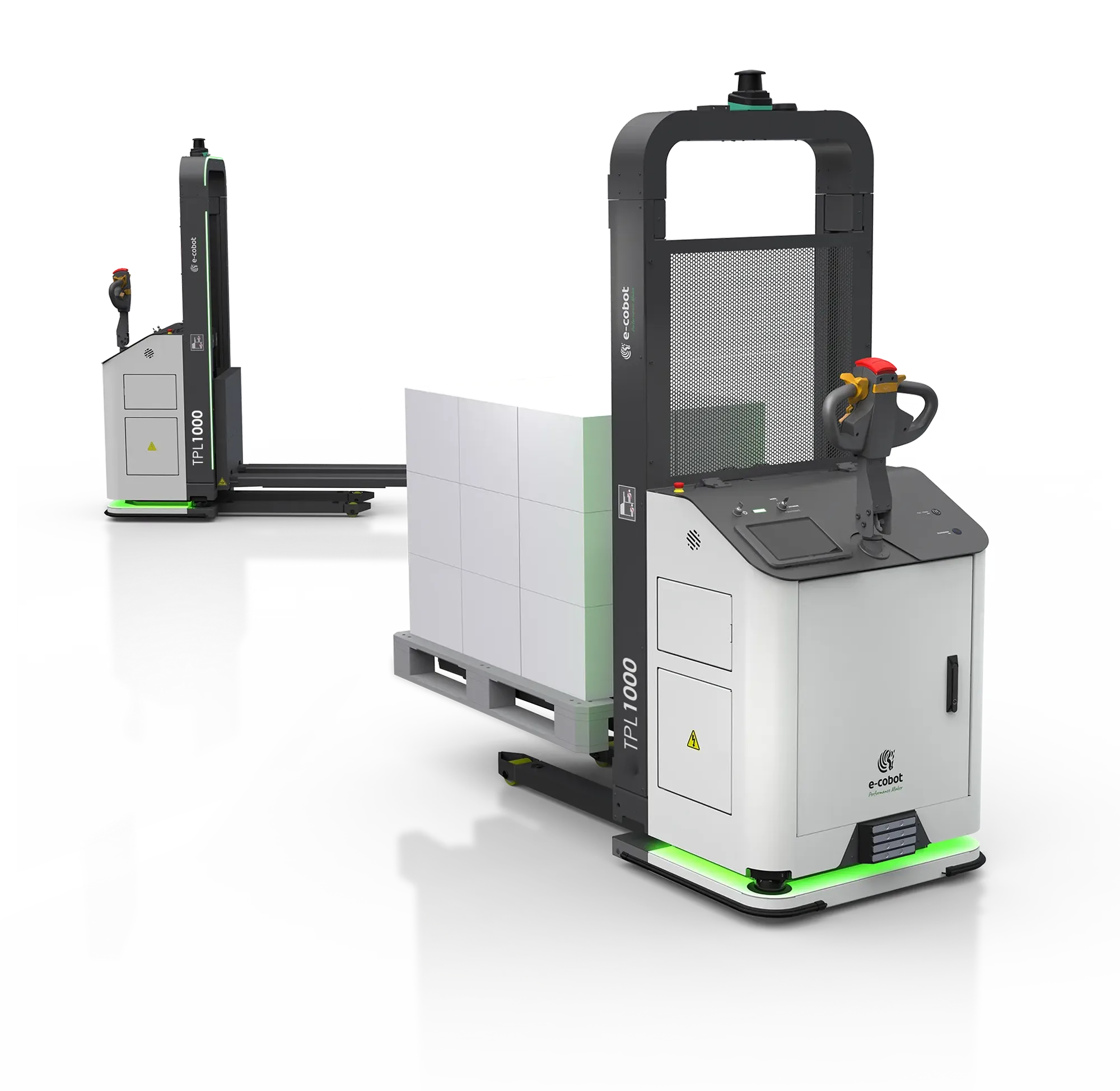
TPL1000
French autonomous pallet jack for
EPAL pallets up to 1,000 kg
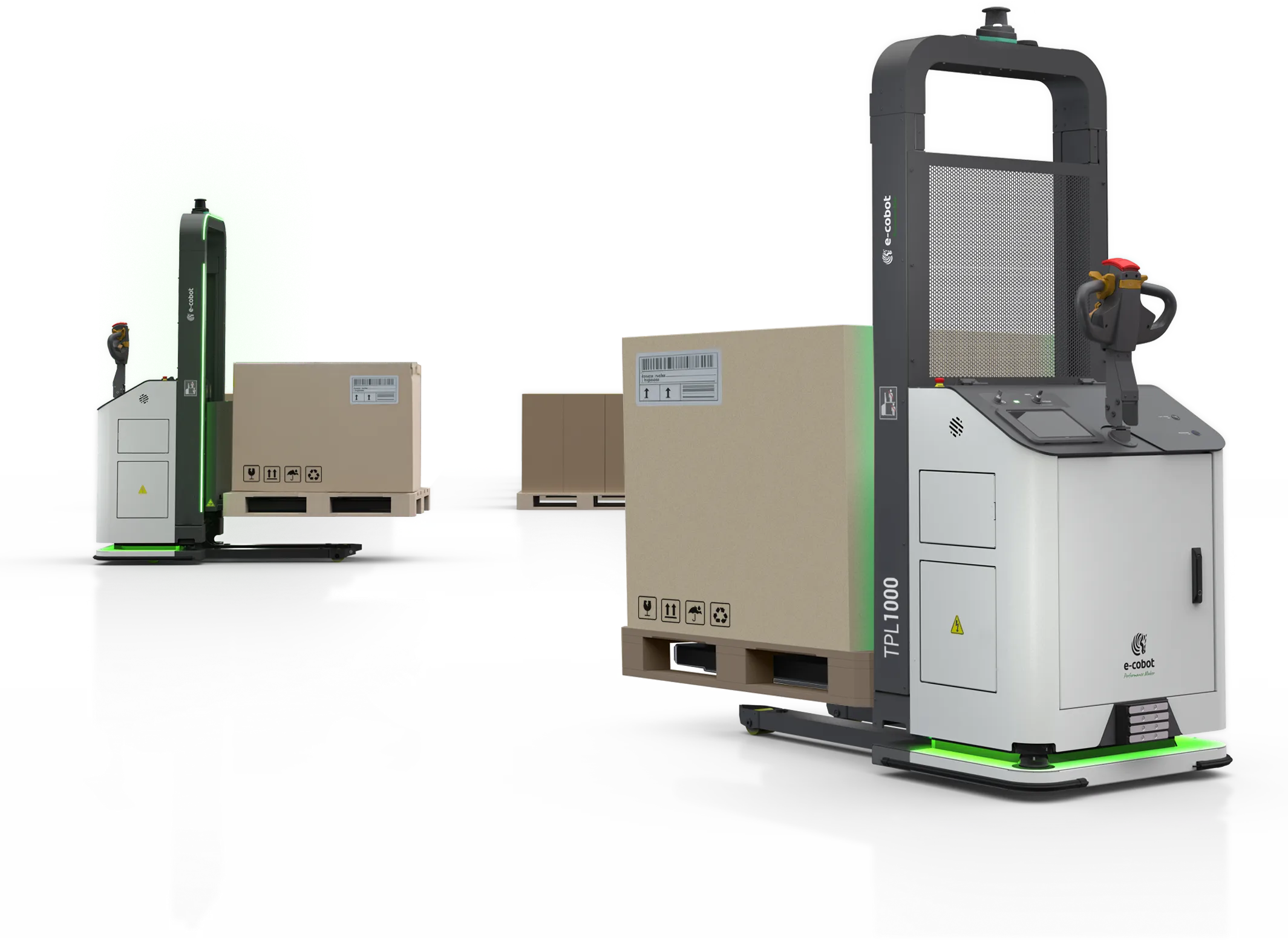
The TPL1000 is an industrial autonomous pallet jack (AMR) designed to automate the movement of EPAL Euro and industrial pallets up to 1,000 kg. With a variable pick-up height from 0 to 800 mm, SLAM navigation without infrastructure modification, 360° safety vision, and 8 hours of battery life, it integrates into the most demanding logistics warehouses, 3PL platforms, and production lines.
Compliant with ISO 3691-4 and CE-marked, the TPL1000 is compatible with your WMS and ERP via the VDA 5050 standard. Designed, assembled, and supported in France by E-COBOT — available for purchase or on a pay-per-use subscription.

Load capacity
1,000 kg

Max speed 1.6 m/s
Battery life
8 h
What is an autonomous pallet jack and how does it work?
An autonomous pallet jack — also called an AMR pallet jack (Autonomous Mobile Robot) — is a motorized handling truck able to pick up, transport, and drop off pallets without a driver or guidance infrastructure. Unlike a walkie or rider electric pallet jack (driven by an operator) or a classic AGV pallet jack (which follows a fixed path marked by magnetic strips or inductive wires), the autonomous pallet jack uses LiDAR sensors, an AI-driven pallet detection camera, and a SLAM (Simultaneous Localization And Mapping) algorithm to navigate freely and adapt its trajectory in real time.
The TPL1000 adds a specific function to this mobility: automatically detecting a pallet on the ground or on a support, adjusting its approach to align its forks, picking up the load, and dropping it off precisely at destination. It automates internal pallet flows — cross-docking between receiving docks and storage zones, production line supply, inter-building transfers, offloading from depalletizers or stretch-wrap cells — and frees your operators from repetitive, low-value handling tasks.
TPL1000: AI detection, flexible pick-up, 1 ton, 8 hours of battery life
Detection, flexibility, capacity, and endurance: the four fundamentals that make the TPL1000 a reliable autonomous pallet jack for intensive logistics.
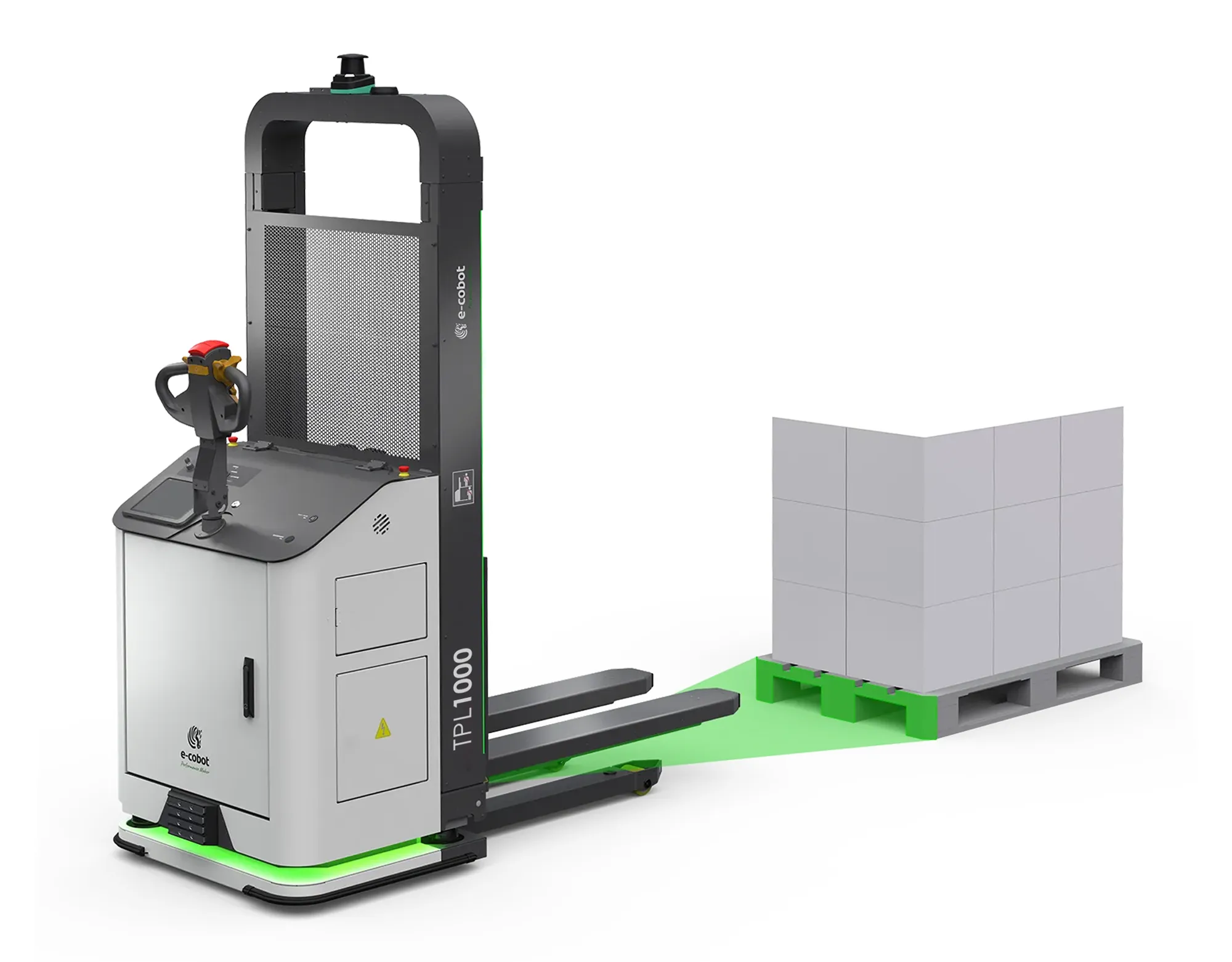
Pallet detection: AI camera
and vision algorithms
The TPL1000 robot embeds a 3D camera driven by a computer vision algorithm trained to recognize the main pallet types on the market: EPAL Euro 800×1200 mm pallets and standard industrial pallets. Once positioned in front of the pallet to pick up, the robot analyzes its environment in real time, identifies the fork entries, aligns its pick-up axis to the centimeter, and automatically initiates the pick-up phase.
This perception technology eliminates manual alignment errors, allows pick-up from positions that aren’t perfectly calibrated (pallets dropped on the fly by an operator or a depalletizer), and secures handling even in dynamic environments where flow geometry changes regularly.
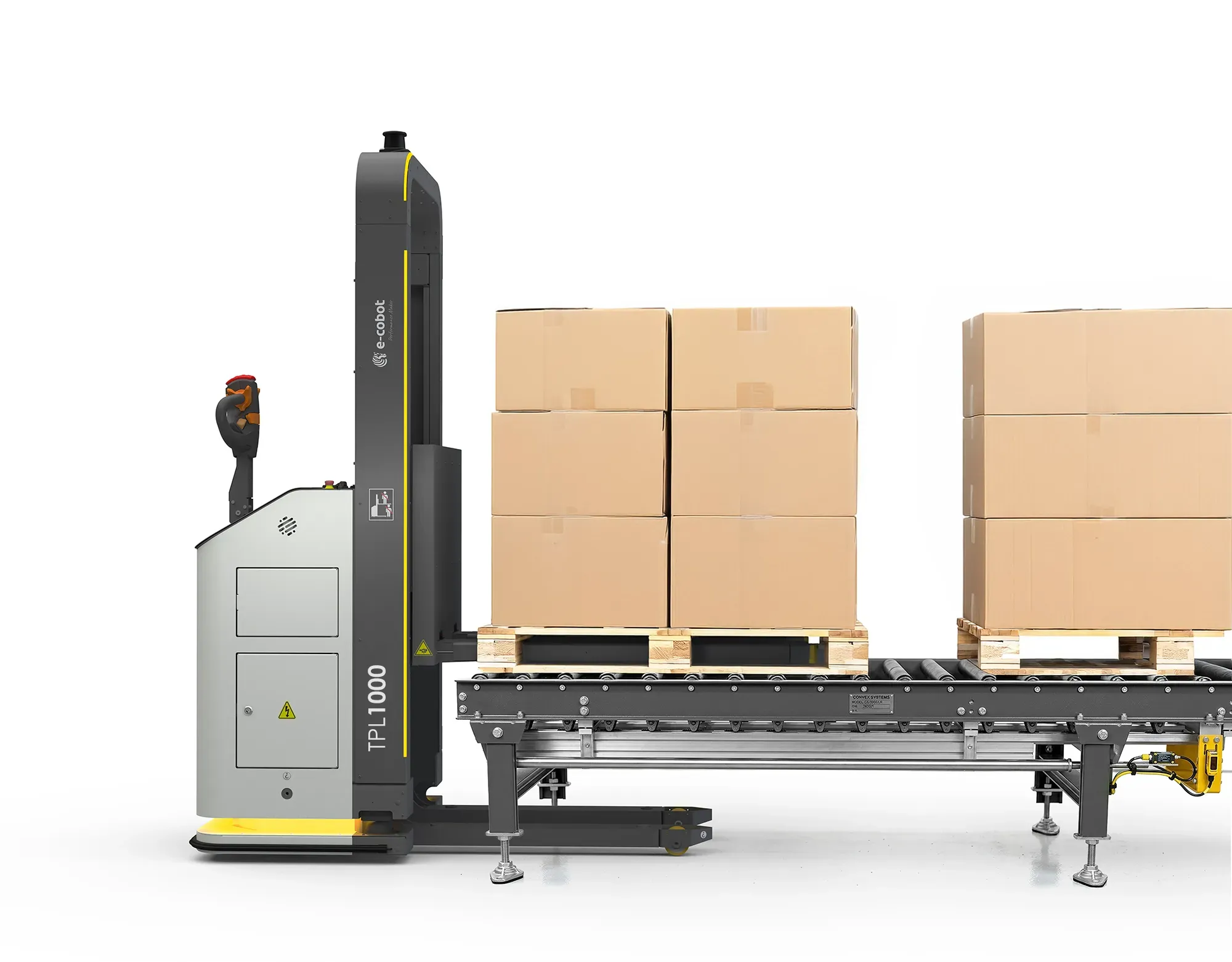
Pick-up and drop-off: from the ground
up to 800 mm in height
The TPL1000 is designed to handle pallets with maximum flexibility: picking up and dropping off directly on the ground, or on supports up to 800 mm in height. This range covers various logistics configurations:
- Roller conveyors (standard height 500–700 mm)
- Automated depalletizer outputs
- Stretch-wrap cells and stackers
- Ergonomic operator stations (working height 700–800 mm)
- Ground storage areas (cross-docking, receiving, shipping)
- Wheeled pallet supports
This versatility lets the TPL1000 slot into an existing flow with no heavy modification to your handling infrastructure.
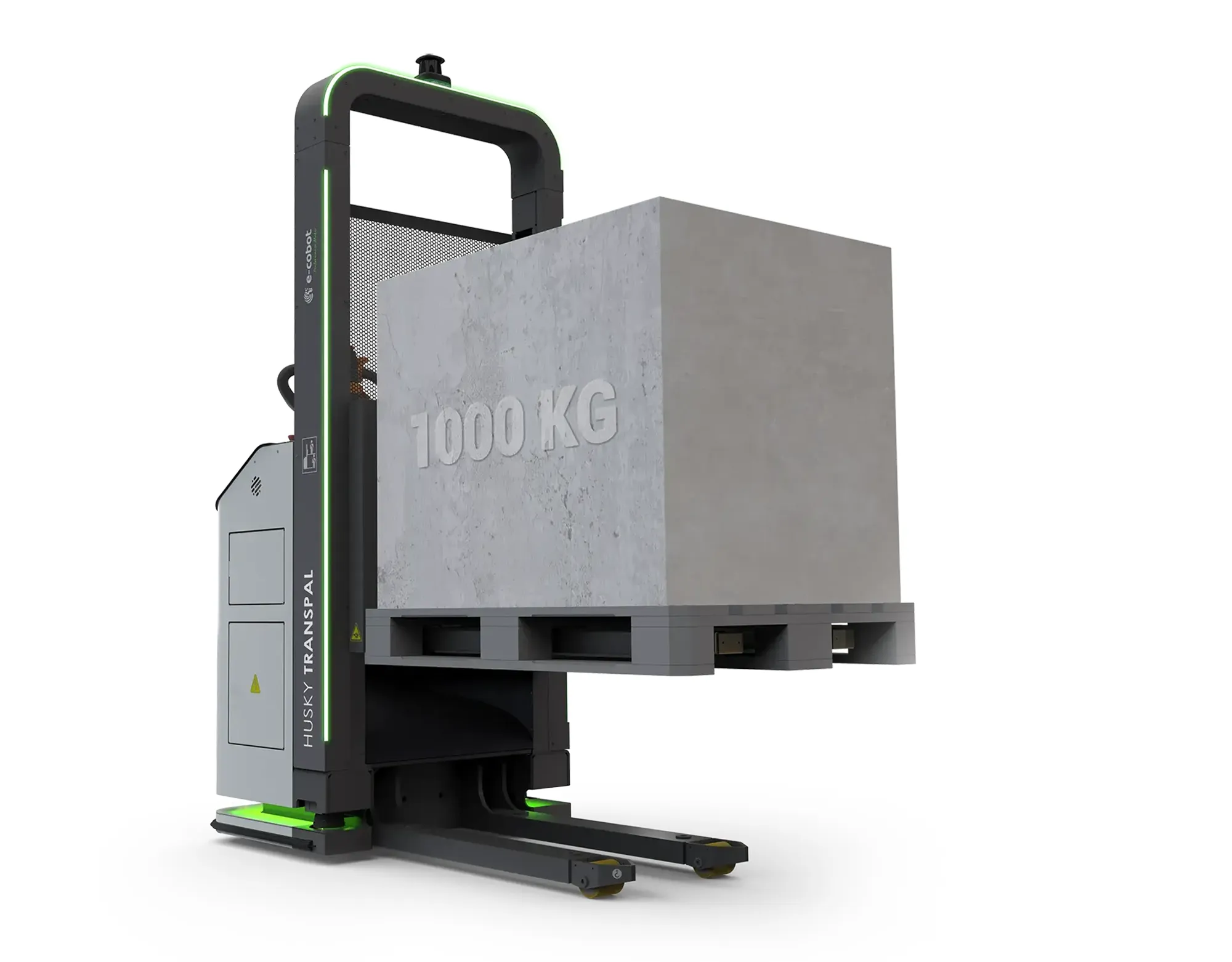
Load capacity up to 1,000 kg:
heavy pallets handled safely
The TPL1000 is designed to handle pallets weighing up to 1,000 kg, covering the vast majority of European logistics use cases: raw material pallets, packaged finished goods, beverage pallets, e-commerce cartons, or loaded industrial pallets. Its reinforced mechanical structure, high-strength steel forks, and drive wheels dimensioned for the load ensure reliable and stable transport, even in demanding conditions.
On a standard flat industrial floor, the full 1,000 kg capacity is guaranteed with no degradation in speed or battery life — the robot maintains its 1.6 m/s maximum speed under load. On sloped or uneven floors, or in the presence of pronounced expansion joints, the maximum recommended capacity may be adjusted. Our engineers systematically validate feasibility on your site during the audit phase.
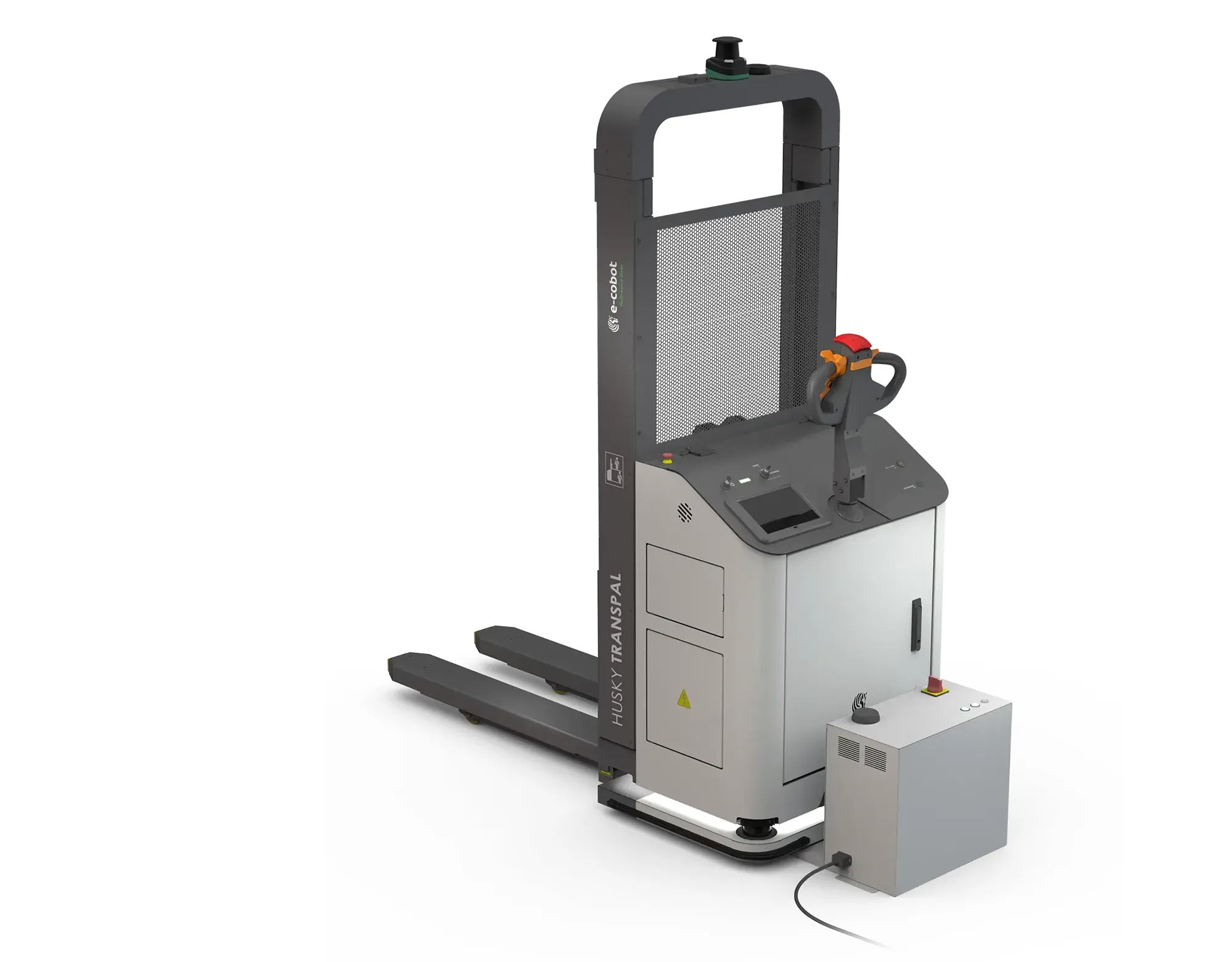
8 hours of battery life for continuous use
The TPL1000’s Li-ion battery delivers 8 hours of continuous battery life, comfortably covering a full shift (standard 8-hour shift) with an operational safety margin. This autonomy is calibrated for intensive usage profiles: multiple movements between storage areas, repeated pick-ups and drop-offs, back-and-forth trips of 50 to 150 meters — representative of real flows in a logistics warehouse or at a production line edge.
For 2-shift or 3-shift operations, the TPL1000 automatically returns to its charging station between missions based on priorities defined by the fleet supervisor. Opportunity charging is possible during natural downtime in the flow (operator breaks, shift changes, machine cycles), extending operational availability. The TPL1000 can thus be used in 24/7 cycles with no human intervention required for recharging.
Onboard technology: SLAM navigation, 360° LiDAR, and functional safety
SLAM navigation:
real-time mapping
The TPL1000 uses a SLAM (Simultaneous Localization And Mapping) algorithm to continuously build and update a 2D/3D map of its environment. It compares this map to sensor data in real time to pinpoint its position within a centimeter. This approach allows the robot to operate in dynamic environments where the layout changes regularly: pallet movements, temporary openings, and the presence of operators and manual handling equipment.
360° safety
LiDAR
A safety LiDAR positioned at the top of the robot scans the environment 360 degrees at several tens of hertz. On every obstacle detection (pedestrian operator, manual pallet jack, forklift, another robot), the TPL1000 adjusts its speed, goes around, or stops depending on the defined protection zone. The safety perimeter is dynamic: it expands automatically based on speed and the load being transported, ensuring safe braking at all speeds.
Infrastructure-free navigation:
zero floor modification
Unlike traditional AGVs which require heavy installation work (magnetic strips glued to the floor, embedded inductive wires, wall reflectors), the TPL1000 deploys with no intervention on your existing infrastructure. Concrete benefits:
- Fast deployment (days rather than weeks).
- Easy route modifications later on.
- Redeployment possible on other lines or in other buildings.
- Total cost of ownership (TCO) significantly reduced.
Functional safety and compliance
with industrial standards
Handling 1,000 kg pallets in an environment shared with human operators requires functional safety at the highest level. The TPL1000 meets the requirements of the standards in force in European industry:
- ISO 3691-4: standard specific to autonomous industrial vehicles (AGVs and AMRs), published in 2020. The TPL1000 complies with all applicable requirements.
- ISO 22915: standard applicable to pallet jacks and industrial trucks (stability, braking, capacity).
- EN ISO 13849-1: Performance Level d (PL-d) on critical safety functions (emergency stops, obstacle detection, protection perimeters, speed control).
- CE marking compliant with the European Machinery Directive (2006/42/EC) and Electromagnetic Compatibility directive.
- Multiple redundant protection layers: physical emergency stop with direct access, adaptive speed reduction, dynamic safety perimeters, visual (status LEDs) and audible signaling.
The TPL1000 is designed to share circulation spaces with your operators and your manual handling equipment — a cobotic approach that sets modern autonomous pallet jacks apart from traditional AGVs.
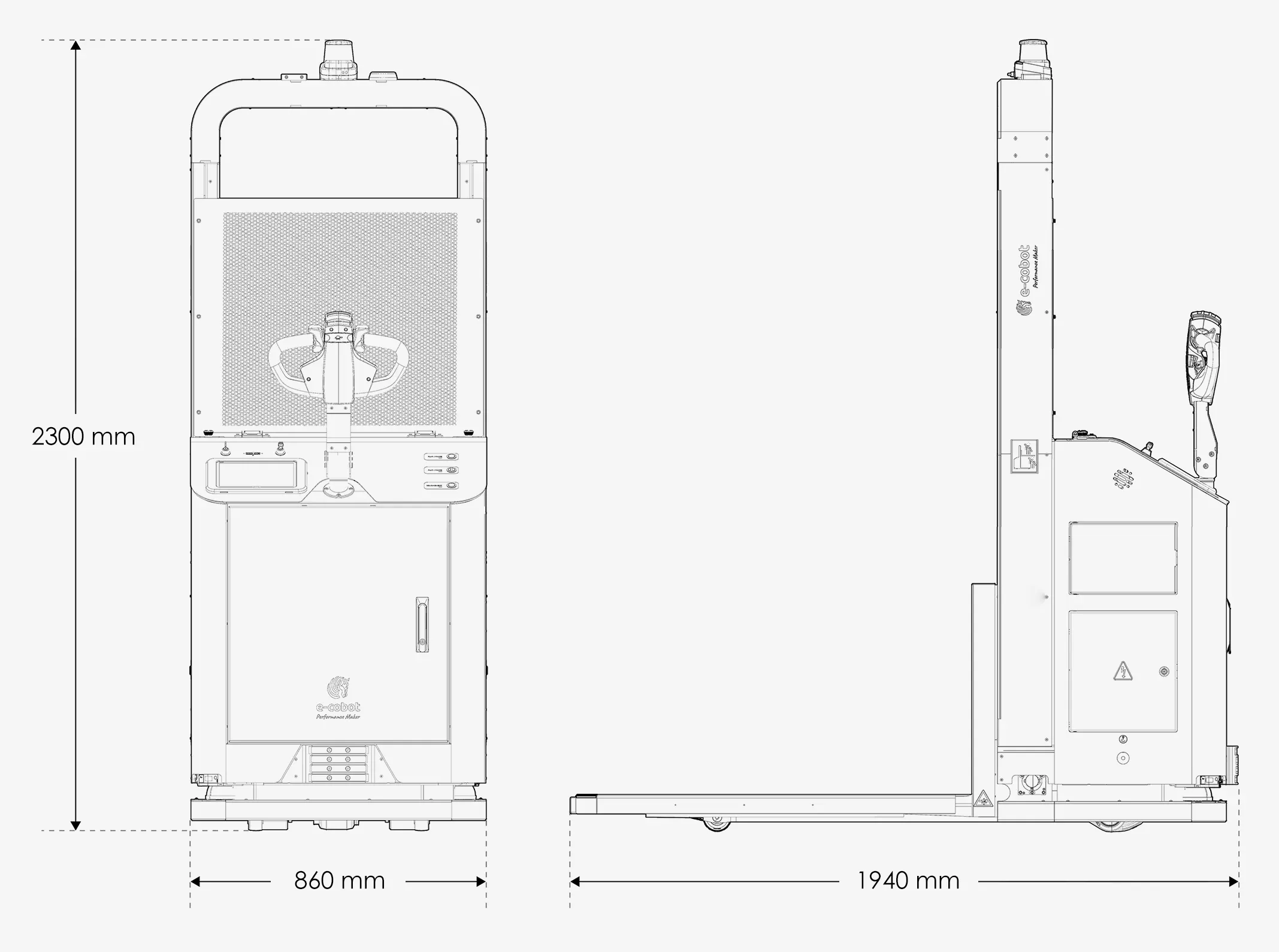
Technical Specifications
1,000 kg
(on standard flat industrial floor)
0 to 800 mm
1.6 m/s
8 hours
360° LiDAR
Use cases by industry sector
The TPL1000 adapts to a wide range of industrial and logistics contexts. Here are three sectors where its return on investment is particularly strong.
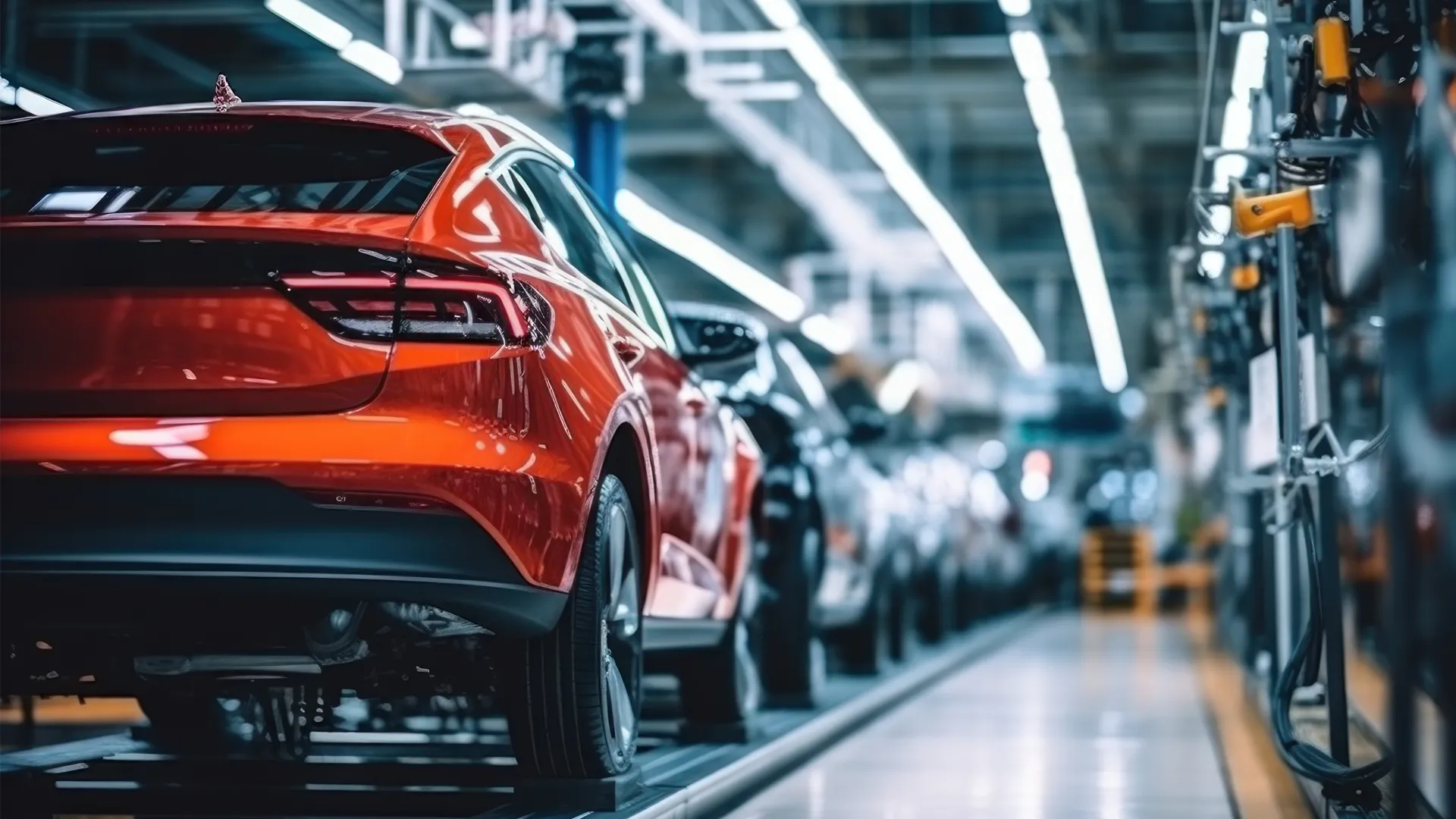
Automotive and tier suppliers
In automotive plants, the TPL1000 delivers component pallets from advanced warehouses to assembly line edges, and removes empty pallets or scrap. It fits into the just-in-time (JIT) and just-in-sequence (JIS) principles that structure automotive logistics, replacing time-consuming rotations of manual pallet jacks.
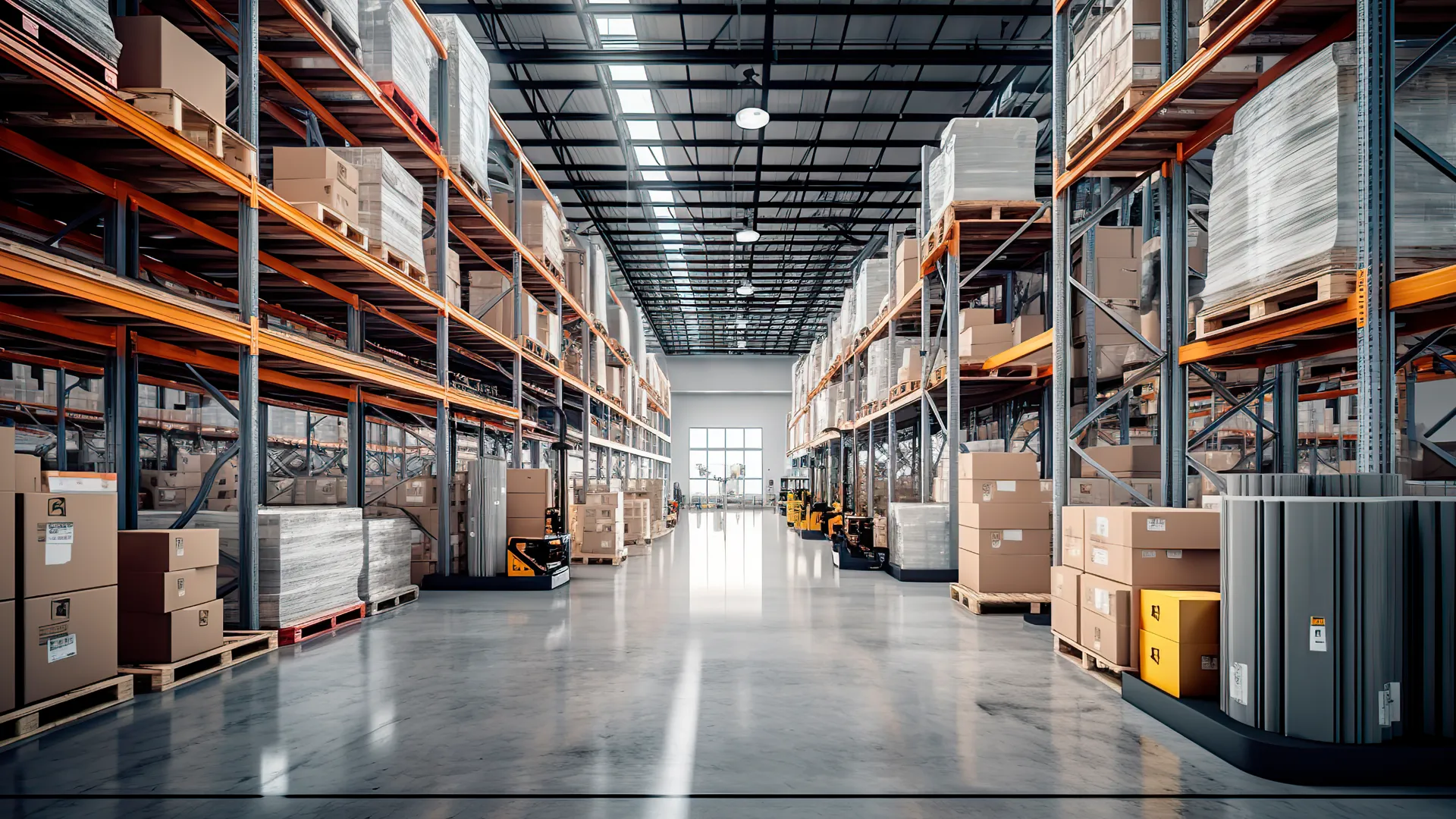
E-commerce and 3PL logistics
For 3PL providers and e-commerce pure-players, the TPL1000 automates cross-docking between receiving and shipping, supplies picking stations, and removes ready orders. Paired with a WMS, it receives its missions in real time — ideal for absorbing seasonal peaks (Black Friday, holidays) and securing 24/7 flows.
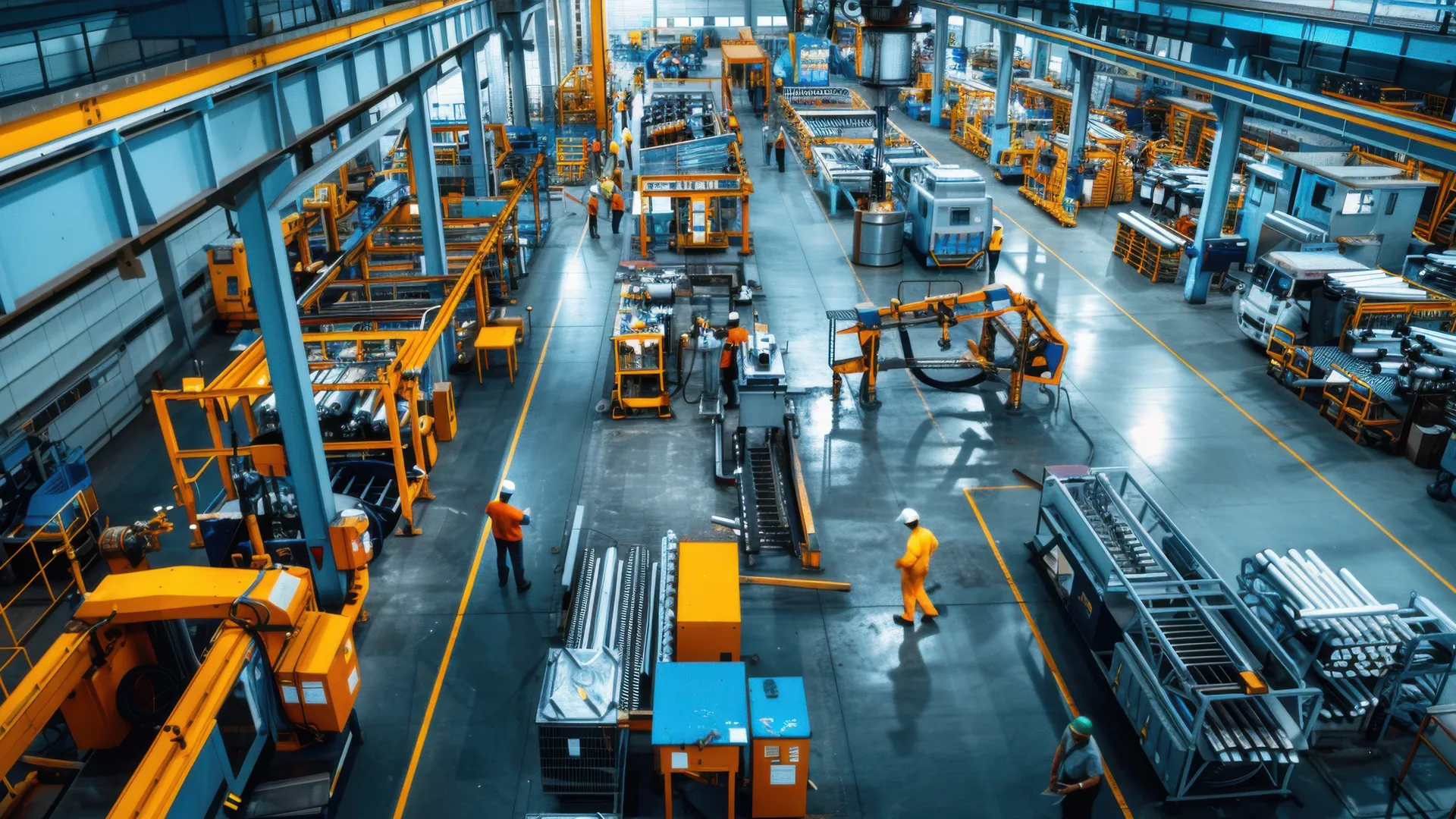
Manufacturing industry
In manufacturing, the TPL1000 automatically picks up pallets from depalletizer outputs, stretch-wrap cells, or roller conveyors, and delivers them to storage or shipping areas. It can be configured to interact with automatic doors, clean airlocks, and robotic elevators over routes of several hundred meters, including inter-building transfers.
Integration with your WMS, ERP, and existing infrastructure
An isolated AMR delivers limited value. The TPL1000 is designed to integrate with your company’s information systems and your existing physical infrastructure.
VDA 5050
interoperability standard
The TPL1000 communicates via the VDA 5050 standard, the European multi-brand interoperability standard for AGVs and AMRs. This lets you integrate it into a mixed fleet alongside robots from other manufacturers, preserving your freedom of choice over time and avoiding vendor lock-in.
WMS, ERP,
and MES connectivity
Our fleet supervisor connects to the major WMS platforms on the market, your ERP, and your MES via standard REST APIs. The robot receives its transport missions directly from your system and reports its statuses and operational data in real time.
Interaction with
existing equipment
The TPL1000 can interact with your automatic doors, clean airlocks, robotic elevators, roller conveyors, depalletizers, and stretch-wrap cells to manage mixed routes without human intervention. Our team configures these interactions during deployment.
Fleet
management
For multi-robot deployments, our MyCobot Suite supervisor centralizes coordination, dynamic mission allocation, battery monitoring, and priority management. It also provides an operations dashboard and productivity indicators (number of pallets moved, cycle time, availability rate).
Two flexible acquisition solutions:
Purchase or Pay-per-use subscription
Purchase
Master your costs over the long term
Investing in the purchase of a mobile robot is a strategic decision that sustainably transforms your logistics processes.
- Budget visibility: CAPEX clearly defined in year 1.
- Equipment amortization over the accounting period.
- Full ownership of the equipment.
- Typical ROI: 18 to 36 months depending on use case (to be validated for your project).
Feel free to contact us — one of our experts will get back to you to study your project and propose the most suitable solution.
Subscription / Pay-per-use
Flexibility and accessibility
Opt for flexible consumption, with no major initial investment. Ideal for testing a use case before scale-up or absorbing seasonal variations.
- No long-term commitment.
- Reduced initial cost, predictable OPEX.
- Maintenance and updates included in the plan.
- No obsolescence risk: version upgrades included.
- Instant quote simulation available.
Frequently asked questions about the TPL1000
What’s the difference between an AGV, an AMR, and a classic electric pallet jack?
An AMR (Autonomous Mobile Robot) like the TPL1000 uses its own LiDAR sensors, an AI camera, and a SLAM algorithm to navigate freely, dynamically go around obstacles, and adapt its trajectories with no infrastructure modification whatsoever.
On deployment: an AGV requires heavy installation work (often several weeks), while an AMR deploys in a few days.
Is the TPL1000 compatible with EPAL Euro pallets?
Its AI camera automatically recognizes the pallet type and adjusts the pick-up axis to the centimeter. For non-standard or specific pallets (plastic, composite, oversized), our engineers validate compatibility during the initial audit phase.
How much does an AMR autonomous pallet jack cost?
The TPL1000 is also available on a pay-per-use subscription, letting you spread the investment over time, test a use case before scale-up, or absorb seasonal peaks. Request a costed simulation based on your actual volumes.
How long does it take to deploy a TPL1000 in my company?
Typical deployment takes between 2 and 4 weeks:
- Initial mapping and mission setup: 1 to 2 days
- Testing and adjustments: 3 to 5 days
- WMS/ERP integration (variable, depending on complexity): 2 to 5 days
- Team training and go-live: 2 to 3 days
For complex projects (multi-robot fleets, deep WMS integrations, interactions with automatic doors or robotic elevators), plan for 4 weeks.
Is the TPL1000 CE-certified and compliant with ISO 3691-4?
Critical safety functions comply with Performance Level d (PL-d) per EN ISO 13849-1.
Is the 1,000 kg capacity valid in all environments?
On sloped or uneven floors, or in the presence of pronounced expansion joints, the maximum recommended capacity may be adjusted. Our engineers systematically validate feasibility on your site during the free audit phase.
Can the TPL1000 coexist with pedestrian operators and manual pallet jacks?
Thanks to its 360° safety LiDAR and dynamic protection perimeter (which adapts to its speed and the load being transported), the TPL1000 safely shares its circulation zones with pedestrian operators, manual pallet jacks, forklifts, and other AMRs. It automatically stops, slows down, or goes around depending on the context.
What maintenance should be planned for an autonomous pallet jack?
An autonomous pallet jack like the TPL1000 requires only light preventive maintenance:
- LiDAR and camera cleaning: monthly
- Visual inspection of forks and wheels: quarterly
- Lifting system check: semi-annually
- Li-ion battery replacement: every 3 to 5 years depending on usage intensity
Under the pay-per-use subscription, all preventive and corrective maintenance is included in the plan — you have nothing to manage.
You don’t pick an AMR robot on your own
Our integration team supports your project from Lean audit to commissioning, multi-brand. Discover our cobotic integration method, proven on more than 100 industrial projects.
Discover our other autonomous mobile robots
An AMR integration project to validate?
Our integration engineers analyze your application for free in 30 minutes: feasibility, budget range, 90-day action plan.