

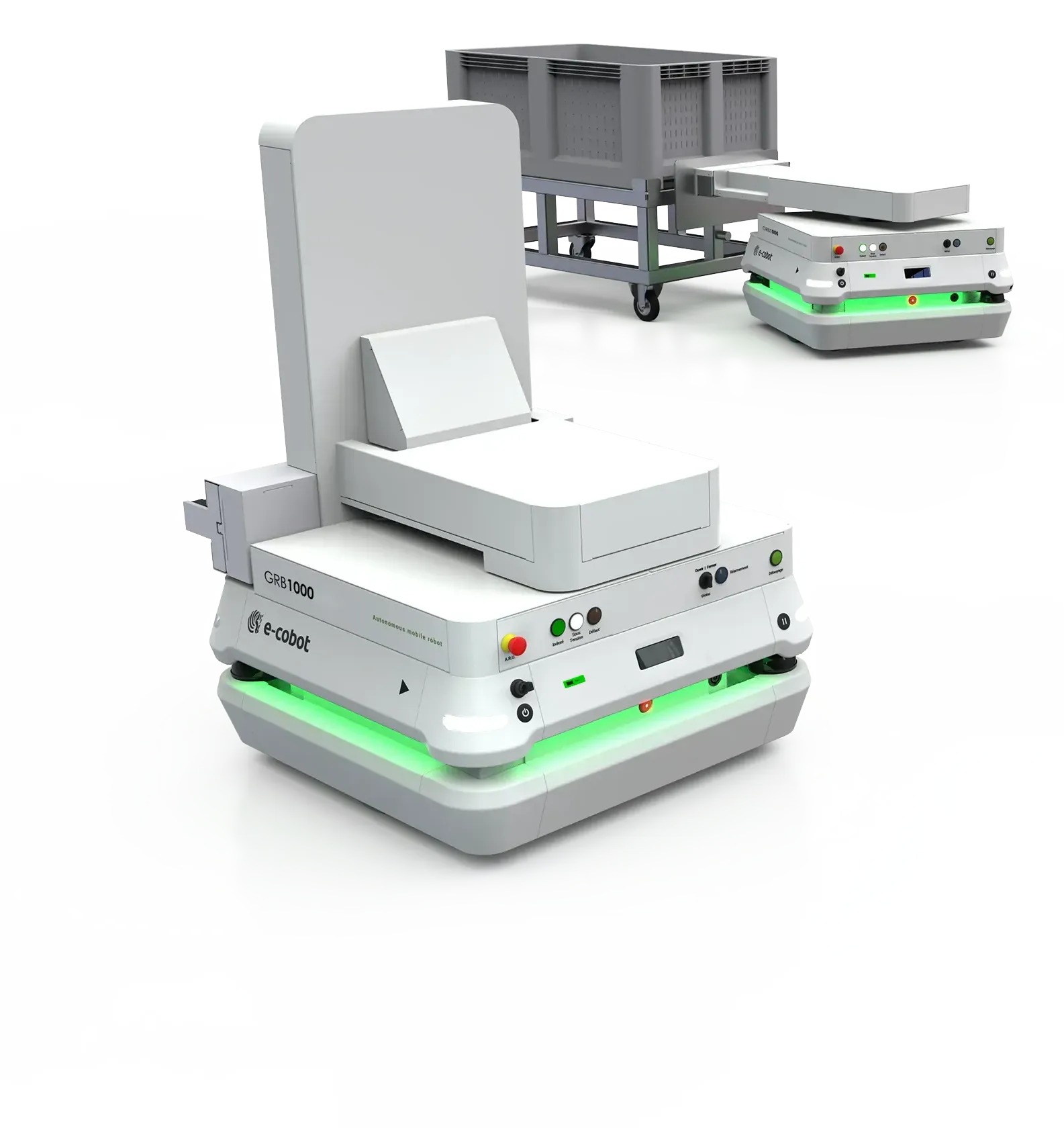
GRB1000
Autonomous mobile robot for towing
up to 1,000 kg, designed in France
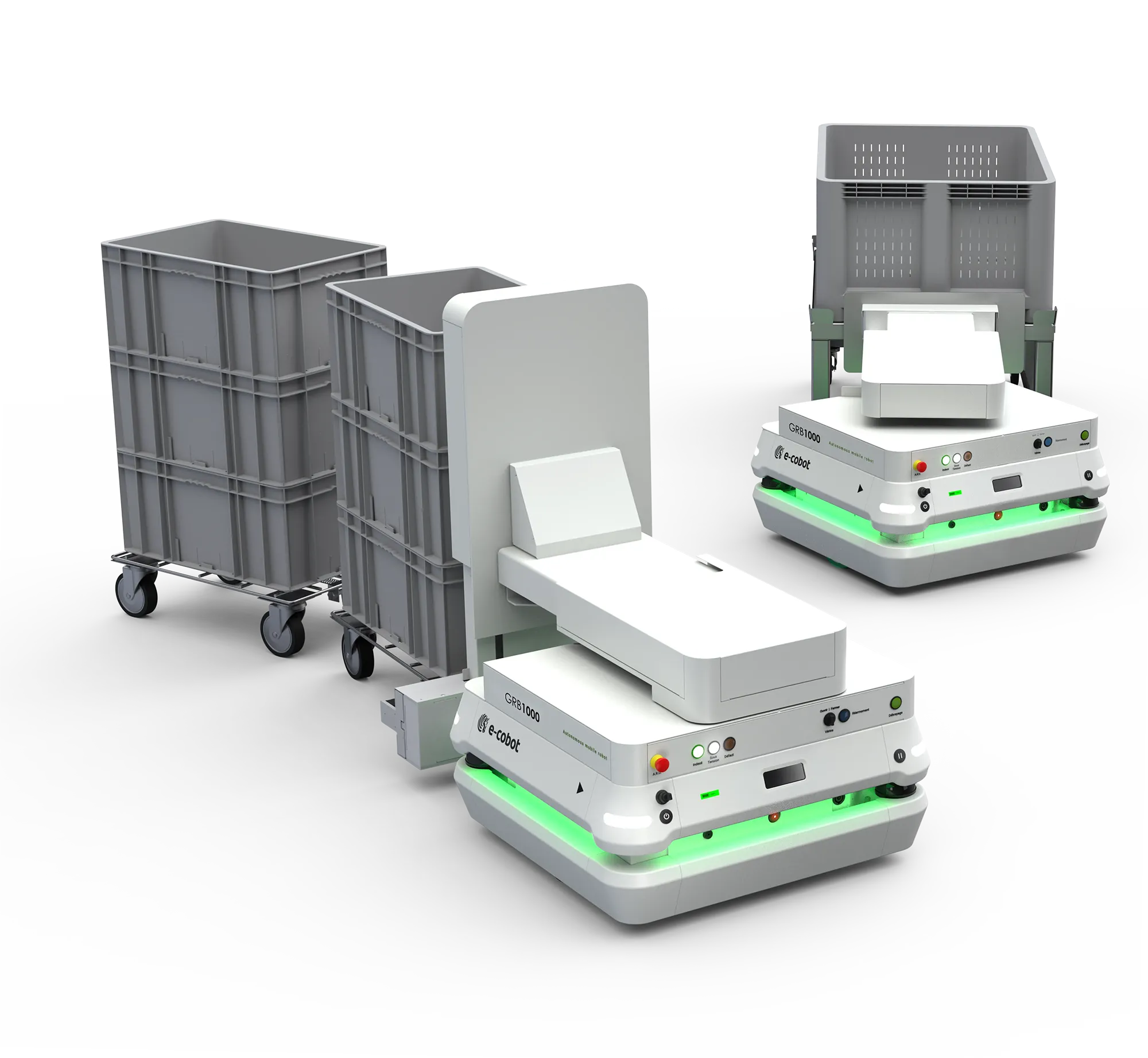
The GRB1000 is an industrial autonomous mobile robot (AMR) designed to automate the transport of all types of rolling loads: carts, bins, wheeled trolleys. With a towing capacity of up to 1,000 kg, a 10-hour battery life, and SLAM navigation without infrastructure modification, it integrates into demanding production and logistics environments.
Available in two gripper configurations (magnetic for metal loads, mechanical clamp for flexibility), compliant with ISO 3691-4 and CE marked, the GRB1000 is compatible with your WMS and ERP via the VDA 5050 standard. Designed, assembled, and supported in France by E-COBOT.
Towing capacity
1,000 kg

Max speed 1.6 m/s
Battery life
10 h
What is a towing AMR and how does it work?
An AMR (Autonomous Mobile Robot) is an industrial vehicle that moves entirely autonomously in a production or logistics environment, without rails, magnetic strips, or dedicated infrastructure. Unlike an AGV (Automated Guided Vehicle) which follows a fixed path, the AMR uses LiDAR sensors, onboard mapping, and a SLAM (Simultaneous Localization And Mapping) algorithm to adapt its trajectory in real time.
A towing AMR like the GRB1000 adds a specific function to this mobility: grabbing, towing, and releasing wheeled carts or bins. It automates internal rolling load flows — milk runs between production stations, inter-building transfers, continuous evacuation of finished products and waste — and frees your operators from repetitive, low-value tasks.
Two gripper options: magnetic or mechanical clamp
The GRB1000 comes in two gripper configurations. Select a feature to learn more.
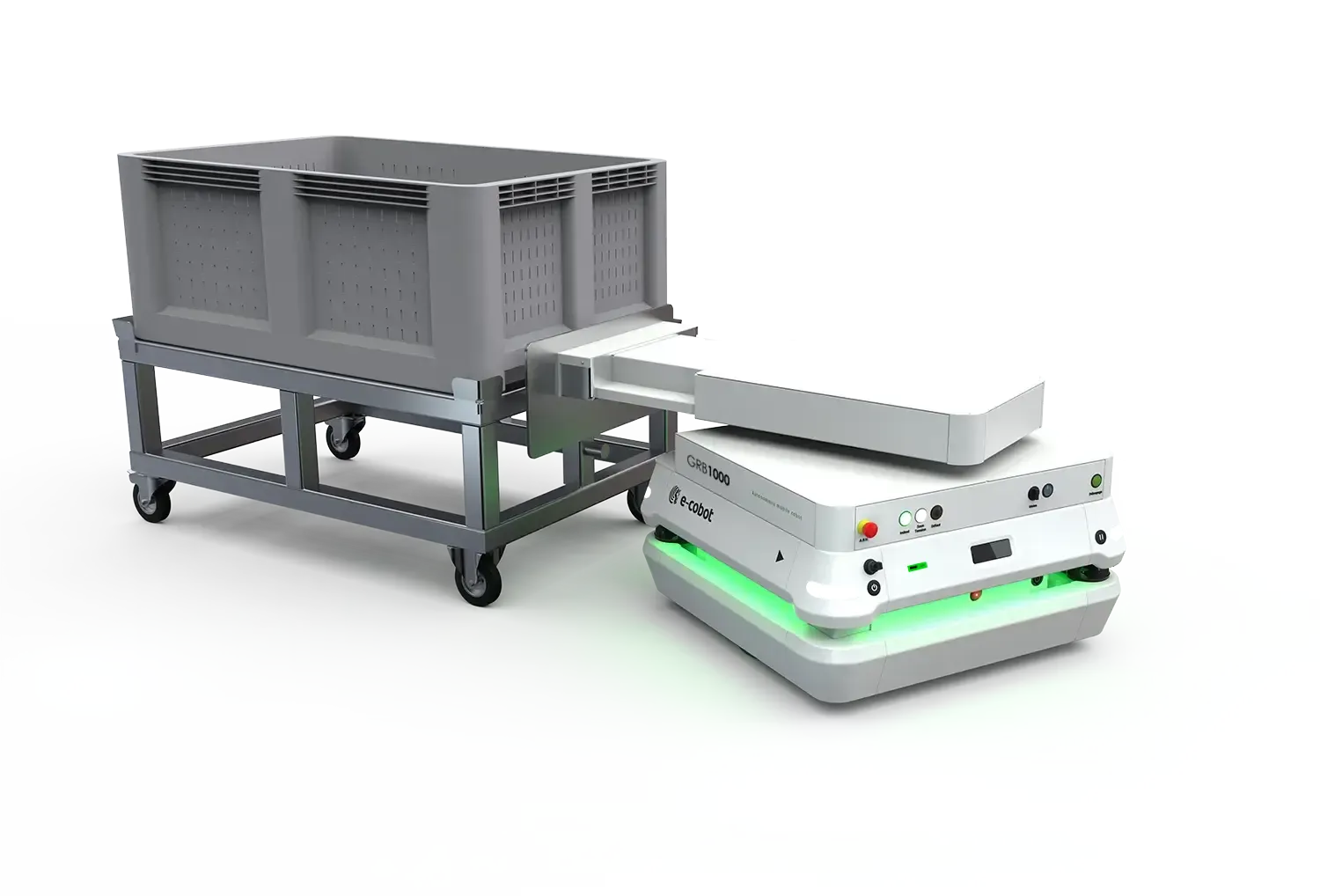
Magnetic gripper: towing
metal carts
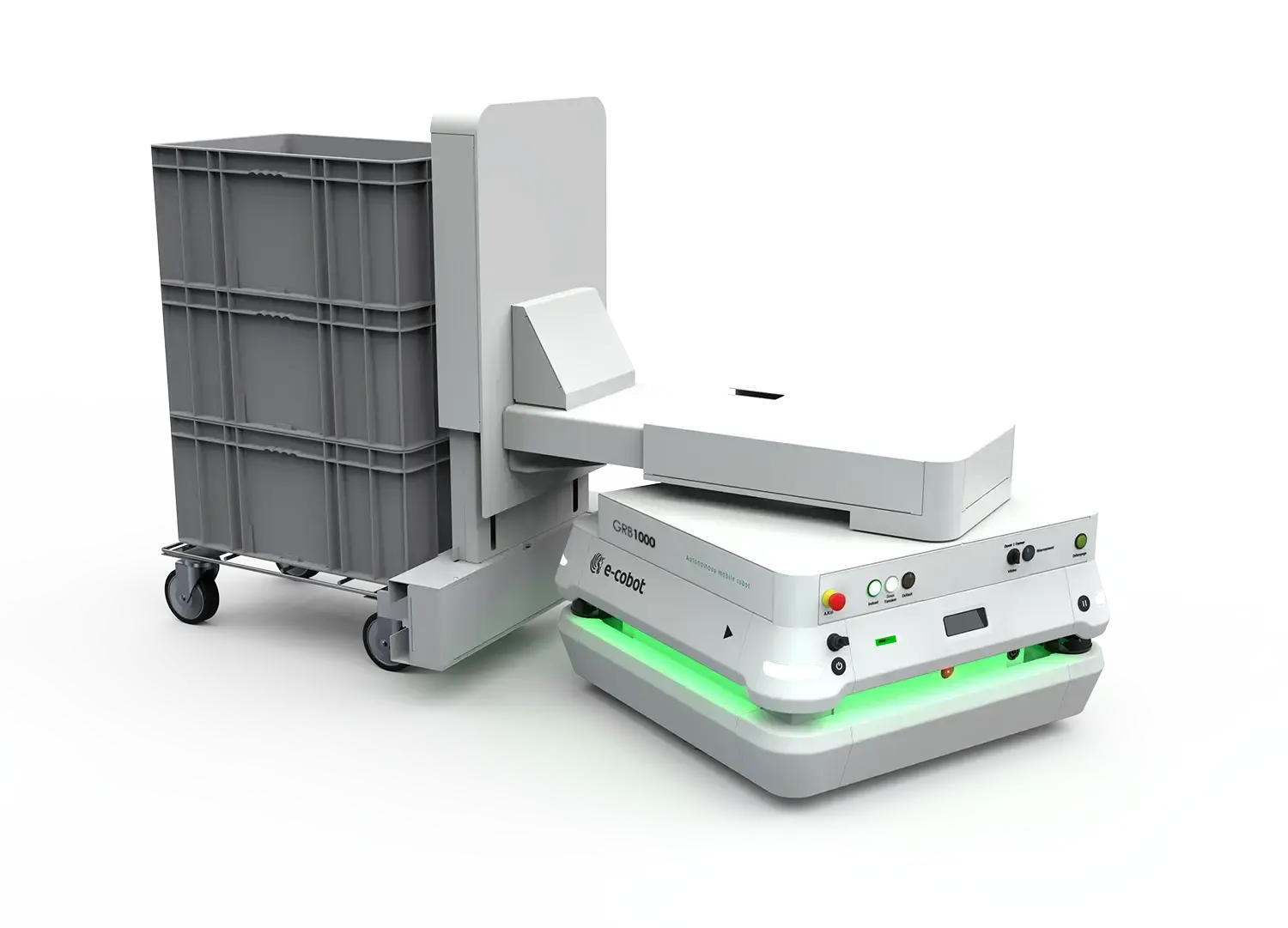
The GRB1000’s magnetic gripper is designed for towing metal logistics units (steel carts or bins). With a fixed pick-up height of 490 mm, ideal for standardized industrial configurations, it ensures a secure grip and smooth movement even on uneven floors.
Recommended for automotive plants, mechanical workshops, and metal processing facilities.
Mechanical clamp gripper: maximum versatility
The mechanical clamp option offers an adjustable grip range of 320 mm to 500 mm in width, and 118 mm to 418 mm in height (two axes). It can handle a wide variety of carts — metal, plastic, composite, or mixed — including non-standardized logistics units.
Recommended for multi-product environments: food and beverage, e-commerce, pharma, 3PL logistics.
Custom configurations (other grippers, specific loads) are available upon request — contact our team.
Towing capacity up to 1,000 kg
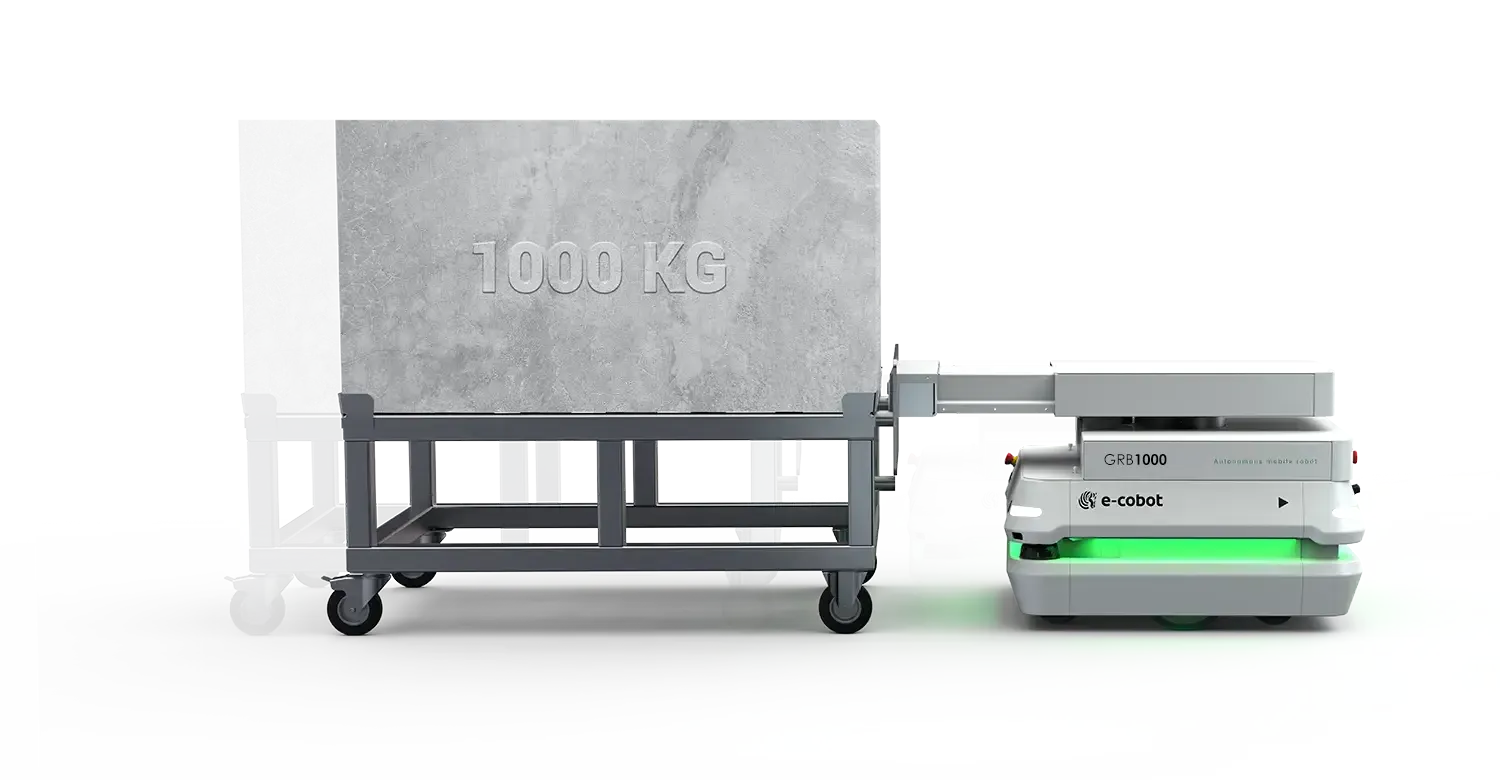
The GRB1000 tows up to 1,000 kg on standard flat industrial floors. This capacity covers virtually all production carts and bins used in European industry.
On sloped or uneven floors, or with very small casters, the maximum recommended capacity may be adjusted — our engineers validate on-site feasibility during the audit.
10 hours of battery life for continuous cycles
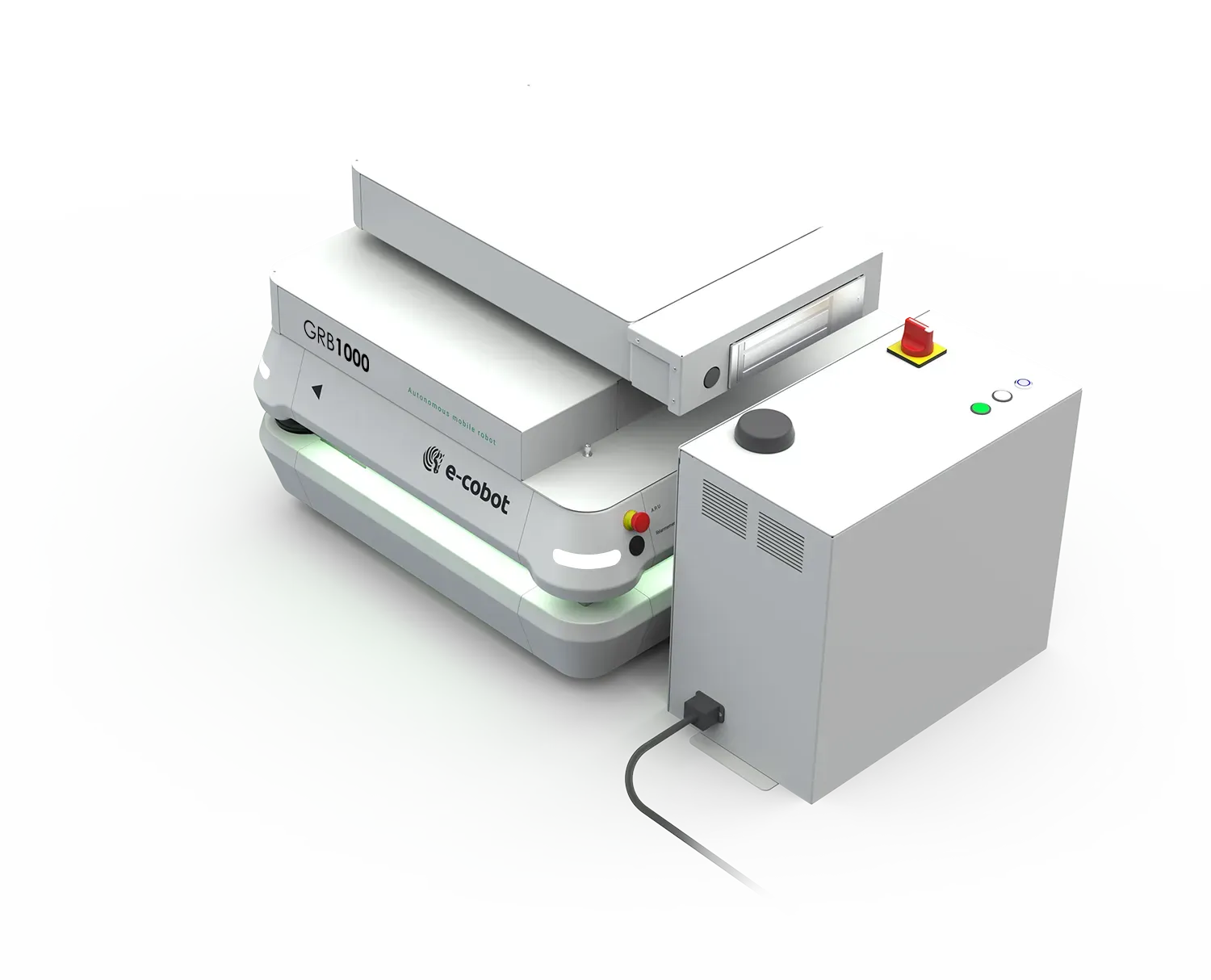
The GRB1000’s Li-ion battery provides 10 hours of continuous battery life, comfortably covering a full shift (8 hours) with a safety margin.
For 2-shift or 3-shift use, the robot automatically returns to its charging station between missions, making it available for 24/7 operations.
Onboard technology: SLAM navigation, 360° LiDAR, and functional safety
SLAM navigation:
real-time mapping
The GRB1000 uses a SLAM (Simultaneous Localization And Mapping) algorithm to continuously build and update a 2D/3D map of its environment. The robot compares this map with real-time sensor data to pinpoint its position within a centimeter. This approach allows the robot to operate in dynamic environments where the layout changes regularly: pallet movements, temporary openings, presence of operators and vehicles.
360°
safety LiDAR
A safety LiDAR scans the environment 360 degrees at several tens of hertz. Whenever an obstacle is detected (object, operator, other vehicle), the robot adjusts its speed, goes around it, or stops depending on the context and the defined protection zone. The safety perimeter is dynamic: it expands based on the robot’s speed, ensuring safe braking at all speeds.
Infrastructure-free navigation:
zero floor modification
Unlike traditional AGVs which require costly infrastructure modifications (magnetic strips glued to the floor, embedded inductive wires, wall reflectors), the GRB1000 deploys without any intervention on your infrastructure. This allows:
- Fast deployment (days rather than weeks).
- Later modification of the route.
- Redeployment possible on other lines or buildings.
- Significantly reduced total cost of ownership (TCO).
Functional safety and compliance
with industrial standards
Operating AMRs in environments shared with human operators demands very high-level functional safety. The GRB1000 meets the requirements of the standards in force in European industry:
- ISO 3691-4 standard: specific to autonomous industrial vehicles (AGVs and AMRs), published in 2020. The GRB1000 complies with all applicable requirements.
- EN ISO 13849-1: Performance Level d (PL-d) on critical safety functions (emergency stops, obstacle detection, protection perimeters).
- CE marking compliant with the European Machinery Directive (2006/42/EC) and EMC directives.
- Multiple redundant protection levels: physical emergency stop within direct reach, adaptive speed reduction, dynamic safety perimeters, visual signaling (status LEDs), and audible signaling.
The GRB1000 is designed to share production and circulation spaces with operators and vehicles safely — a cobotic approach that sets modern AMRs apart from traditional AGVs.
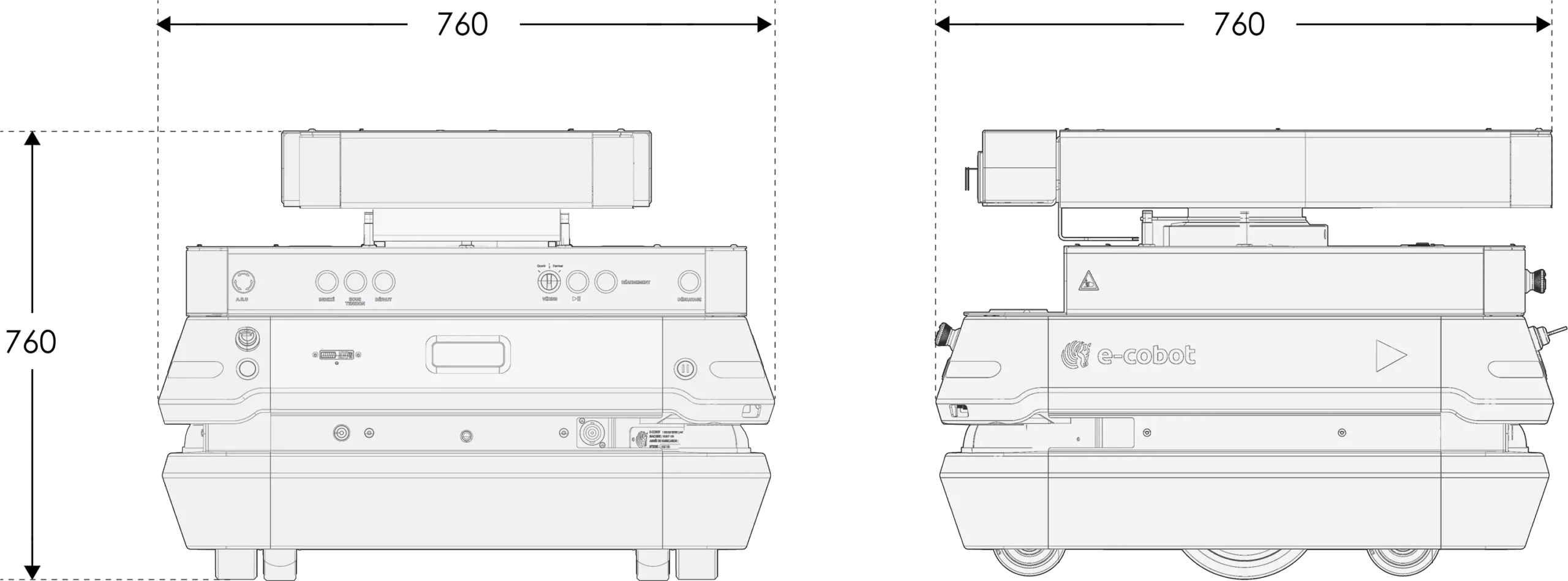
Technical Specifications
1,000 kg
(on standard flat industrial floor)
1.6 m/s
10 hours
360° LiDAR
Use cases by industry
The GRB1000 adapts to a wide range of industrial and logistics contexts. Here are three sectors where its return on investment is particularly strong.
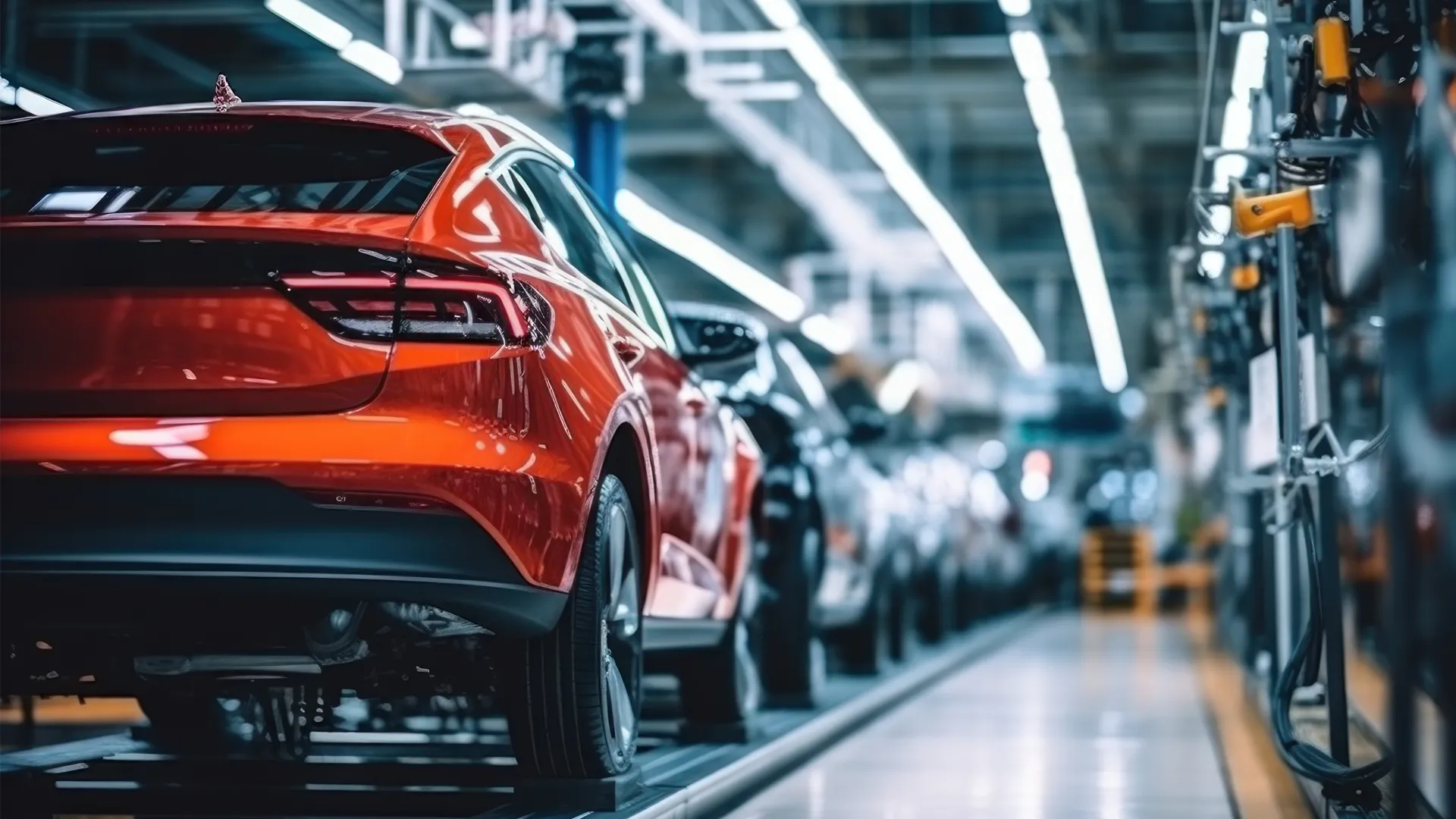
Automotive and Tier suppliers
The GRB1000 automates milk runs between storage areas and assembly stations, passing at fixed intervals to exchange empty and full carts. Result: 1 to 2 operators freed up, continuous supply, just-in-time and just-in-sequence compliance.
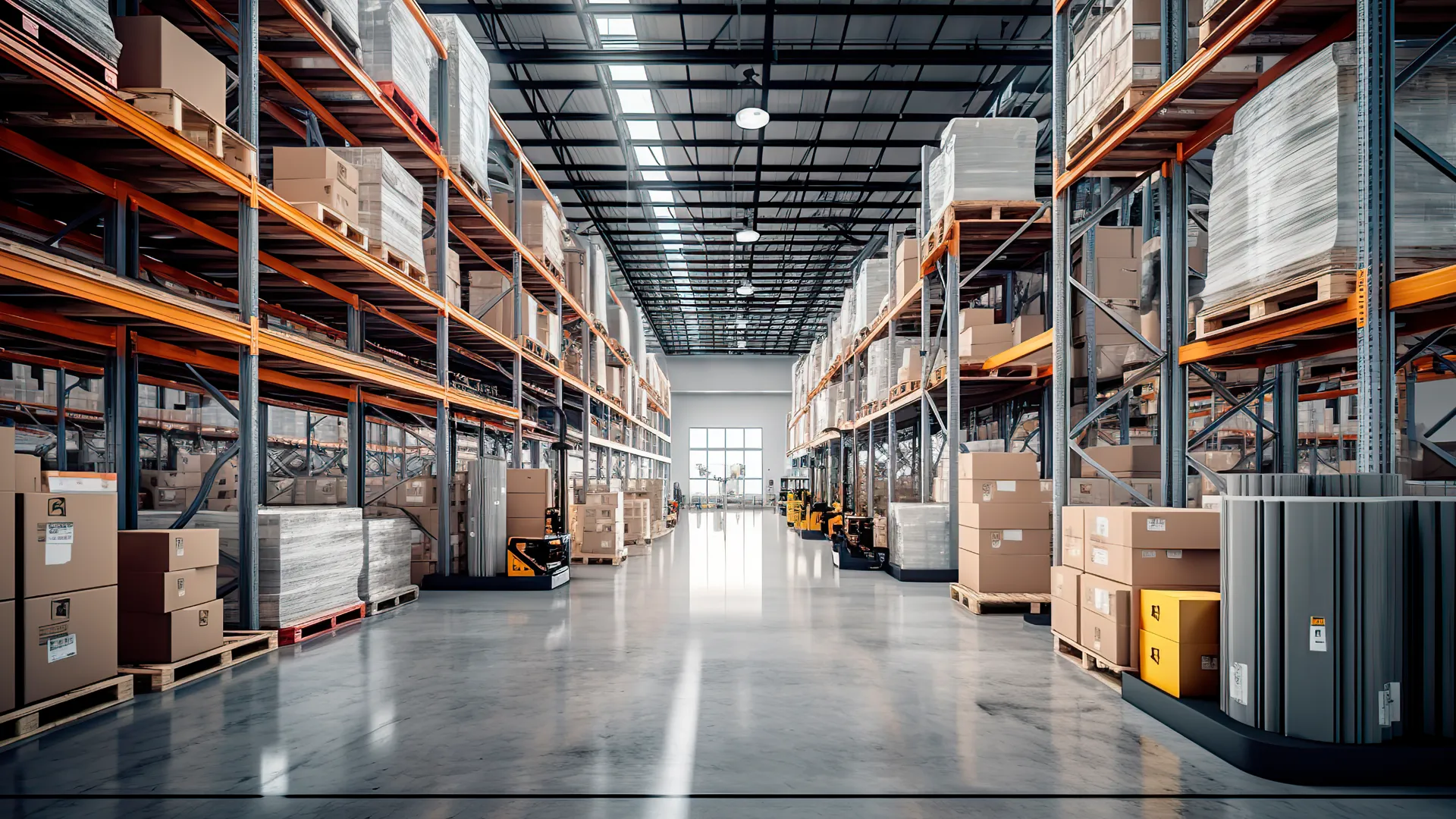
E-commerce and 3PL logistics
Paired with a WMS, the GRB1000 supplies picking areas with product carts and evacuates ready orders to shipping, receiving its missions in real time. Ideal for absorbing seasonal peaks without massive temporary hiring.
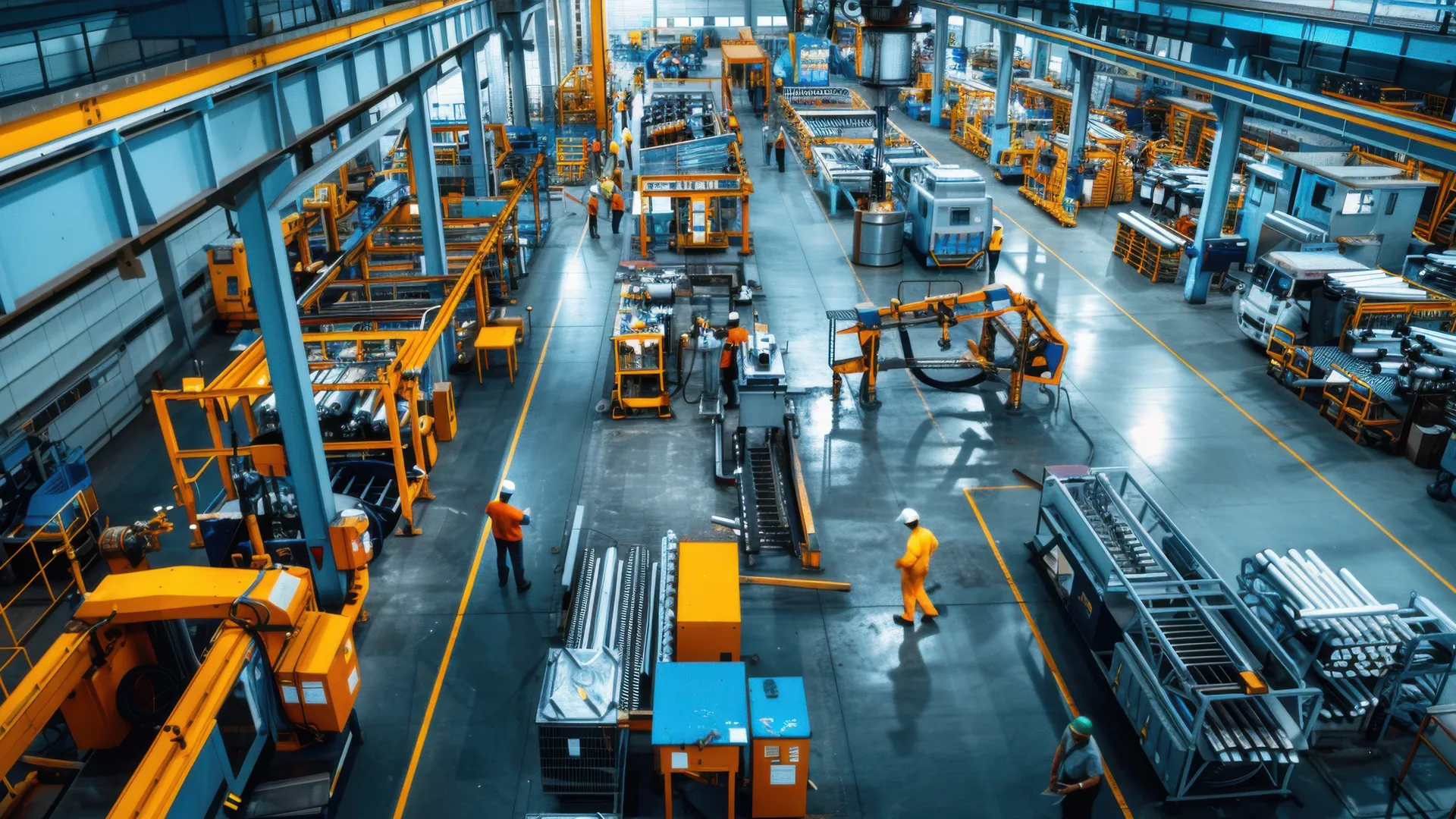
Manufacturing industry
For inter-building transfers, the robot moves semi-finished parts carts between distant workshops, interfacing with automatic doors, clean airlocks, and robotic elevators over routes of several hundred meters.
Integration with your WMS, ERP, and existing infrastructure
An isolated AMR delivers only limited value. The GRB1000 is designed to integrate with your company’s information systems and existing physical infrastructure.
VDA 5050
interoperability standard
The GRB1000 communicates using the VDA 5050 standard, the European multi-brand interoperability standard for AGVs and AMRs. This allows you to integrate it into a mixed fleet alongside robots from other manufacturers — you keep your freedom of choice over time and avoid vendor lock-in.
WMS, ERP, and MES
connectivity
Our fleet supervisor connects with major market WMS platforms, your ERP, and your MES via standard REST APIs. The robot receives its transport missions directly from your system and reports statuses and operational data in real time.
Interaction with
existing equipment
The GRB1000 can interact with your automatic doors, clean airlocks, robotic elevators, and conveyors to manage mixed routes without human intervention. Our team configures these interactions during deployment.
Fleet
management
For multi-robot deployments, our MyCobot Suite supervisor centralizes coordination, dynamic mission allocation, battery monitoring, and priority management. It also provides an operations dashboard and productivity indicators.
Two flexible acquisition options:
Purchase or Pay-per-use subscription
Purchase
Master your long-term costs
Investing in the purchase of a mobile robot is a strategic decision that sustainably transforms your logistics processes.
- Budget visibility: CAPEX expense clearly defined in year 1.
- Equipment depreciation over the accounting period.
- Full ownership of the equipment.
- Typical ROI: 18 to 36 months depending on the use case (to be validated on your project).
Feel free to contact us — one of our experts will get back to you to study your project and propose the most suitable solution.
Subscription / Pay-per-use
Flexibility and accessibility
Opt for flexible consumption, without a major initial investment. Ideal for testing a use case before scale-up or absorbing seasonal variations.
- No long-term commitment.
- Reduced initial cost, predictable OPEX expense.
- Maintenance and updates included in the package.
- No obsolescence risk: version upgrades included.
- Instant quote simulation available.
Frequently asked questions about the GRB1000
What’s the difference between an AGV and a towing AMR?
An AMR (Autonomous Mobile Robot) like the GRB1000 uses its own LiDAR sensors and a SLAM algorithm to navigate freely, dynamically go around obstacles, and adapt its trajectories without any modification to the site infrastructure.
Cost-wise: an AGV requires heavy installation work (sometimes several weeks), while an AMR deploys in a few days.
How much does a towing AMR mobile robot cost?
The GRB1000 is also available on a pay-per-use subscription, which spreads the investment over time and lowers the entry ticket. Request a quote based on your actual use case.
How long does it take to deploy a GRB1000 in my company?
A typical deployment takes between 2 and 4 weeks:
- Initial mapping and mission configuration: 1 to 2 days
- Testing and fine-tuning: 2 to 4 days
- Team training: 1 to 3 days
For complex projects (fleet of several robots, deep WMS integrations, interactions with automatic doors or robotic elevators), plan for 4 weeks.
Is the GRB1000 CE-certified and ISO 3691-4 compliant?
Critical safety functions comply with Performance Level d (PL-d) per EN ISO 13849-1, and with Safety Integrity Level SIL 2 for the most critical protection functions.
Is the 1,000 kg capacity valid in all environments?
On sloped or uneven floors, or with very small or worn casters, the maximum recommended capacity may be adjusted. Our engineers systematically validate feasibility on your site during the audit phase.
Can the GRB1000 coexist with my operators and other vehicles?
Thanks to its 360° safety LiDAR and dynamic protection perimeter (which adapts to its speed), the GRB1000 safely shares its circulation zones with pedestrian operators, other robots, and manual handling equipment (pallet trucks, forklifts). It stops, slows down, or goes around automatically depending on the context.
What maintenance should be planned for an AMR?
An AMR like the GRB1000 requires light preventive maintenance:
- LiDAR and sensor cleaning: monthly
- Visual inspection of wheels and casters: quarterly
- Li-ion battery replacement: every 3 to 5 years depending on usage intensity
With the pay-per-use subscription, all preventive and corrective maintenance is included in the package — you have nothing to manage.
An AMR robot isn’t chosen alone
Our team of integrators supports your project from Lean audit to commissioning, multi-brand. Discover our cobotic integration method proven on more than 100 industrial projects.
Discover our other autonomous mobile robots
AMR integration project to validate?
Our integration engineers analyze your application for free in 30 minutes: feasibility, budget range, 90-day action plan.