

Mobile robotics and AMR technology:
how our autonomous robots navigate
An autonomous mobile robot is not just a mobile platform with sensors. It is a coordinated system in which the localization algorithms, perception, decision-making and safety logic run in real time on the same machine, while remaining interoperable with the rest of your industrial environment.
Understanding AMR technology
AMR vs AGV — The technological differences
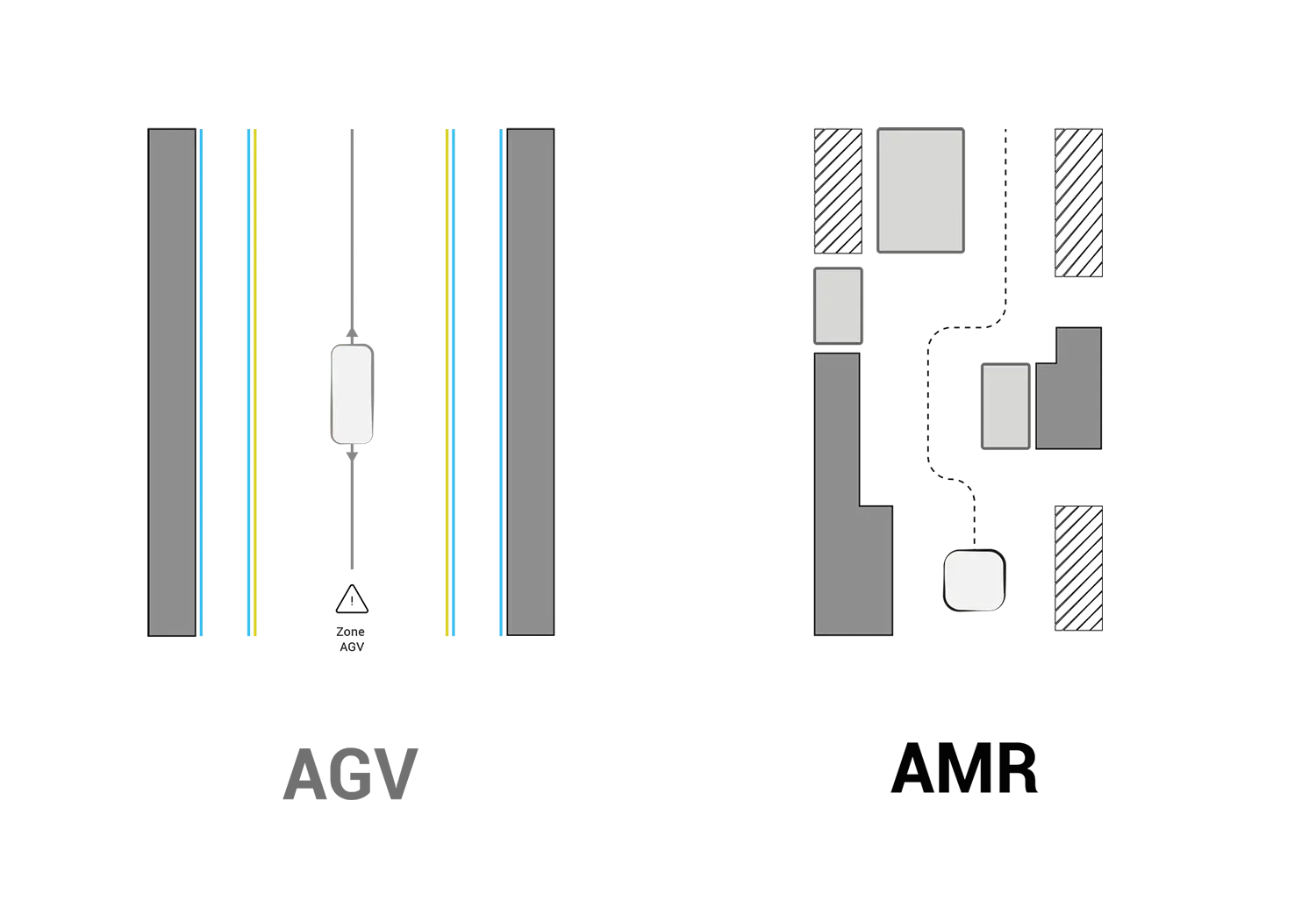
The legacy of industrial mobile robotics is the AGV (Automated Guided Vehicle). AGVs follow predefined paths marked by magnetic strips, embedded wires or QR codes on the floor. They are reliable, but rigid. Any change to the layout requires re-marking the floor, and no AGV can avoid an unexpected obstacle: it stops and waits.
The AMR (Autonomous Mobile Robot) removes this dependence on infrastructure. It builds and updates its own map of the environment from on-board sensors. It plans its own paths. It detects obstacles in real time and navigates around them. Replacing a fleet of AGVs with AMRs typically raises the mission completion rate from 80-85% (AGVs blocked by obstacles) to 96-99% (AMRs that reroute autonomously).
The key components of an AMR
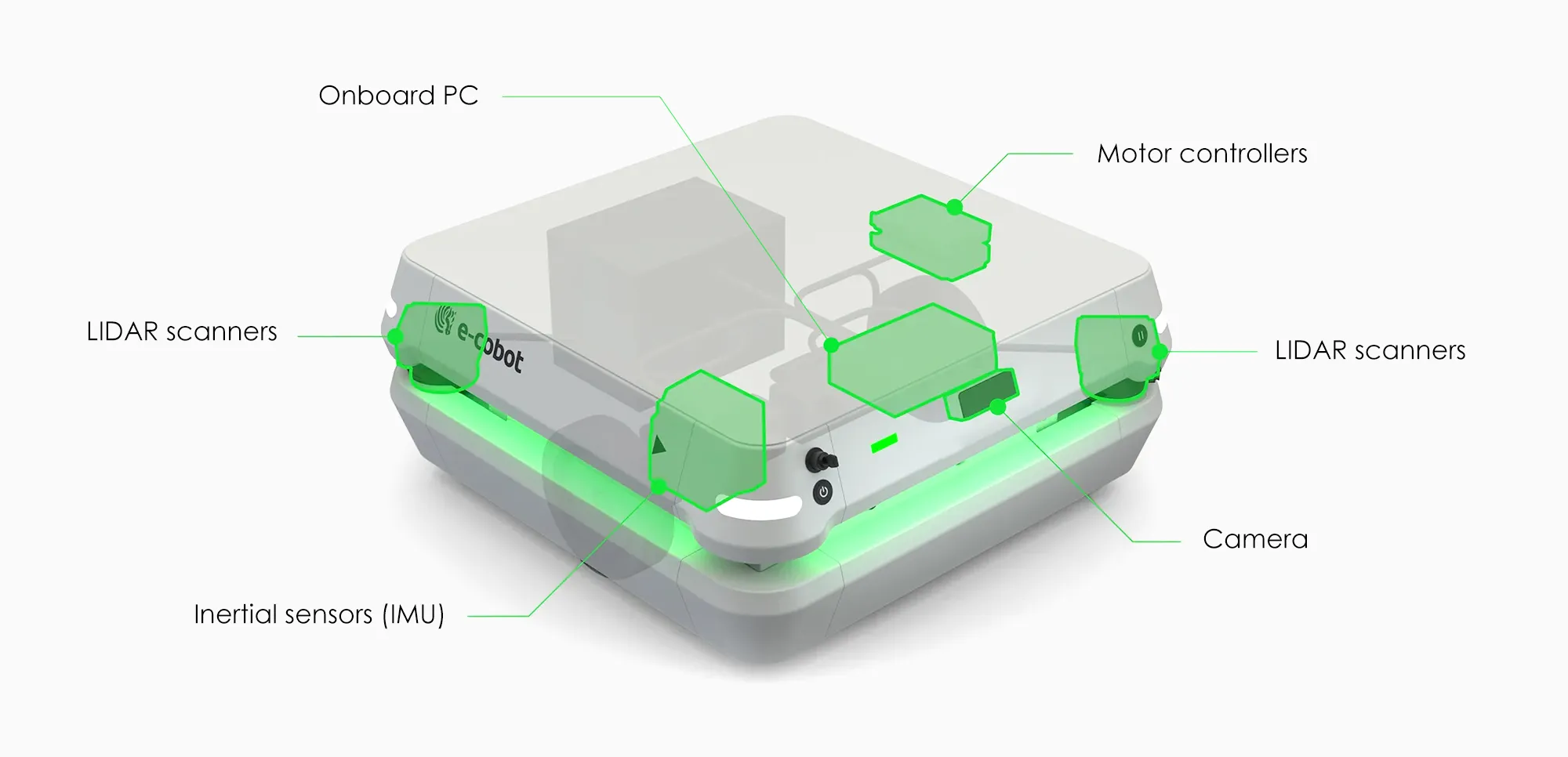
A complete AMR combines four functional layers:
- Perception: LIDAR scanners, cameras, inertial sensors and motor encoders that perceive the environment and the state of the robot itself.
- Localization and navigation: algorithms (SLAM, path planning) that determine where the robot is and where it needs to go.
- Decision logic: a real-time controller that turns the navigation plan into motor commands and reacts to safety events.
- Communication: protocols (VDA 5050, OPC UA, MQTT) that integrate the robot with your fleet manager, your MES and your ERP.
Each layer must be tightly coupled to the others. A latency, a drift or a missed sensor reading in one propagates to the entire system. This is where engineering depth makes the difference.
Operating modes of our AMRs
Not every mission requires the same level of autonomy. In the field, an AMR can switch between fully autonomous operation, collaboration with a human operator, or direct control depending on the context. The HSK range supports three combinable operating modes, selected from the robot’s HMI or commanded remotely by the fleet manager.
repetitive missions
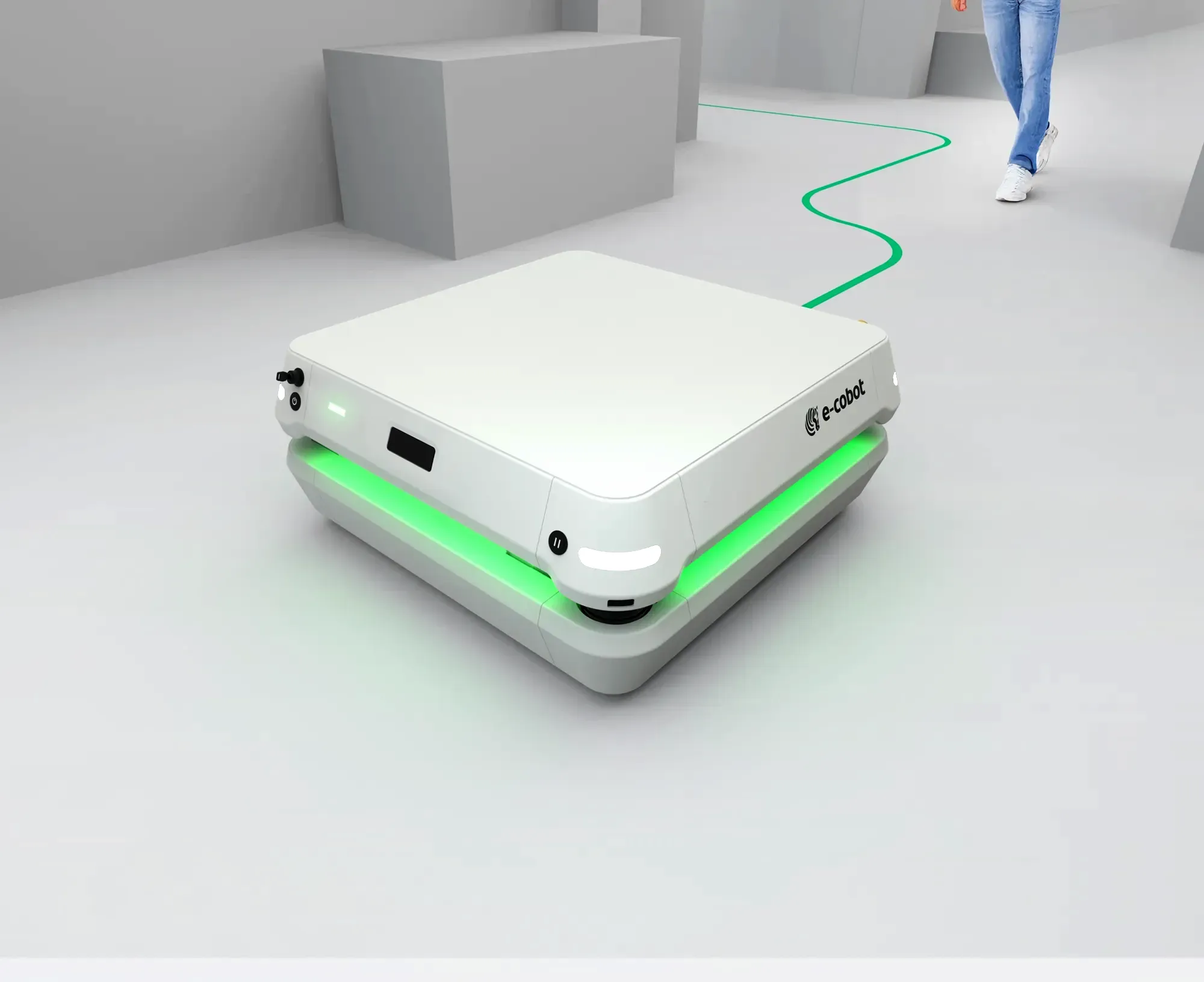
Autonomous mode for repetitive missions
This is the default mode and the one most used in production. The AMR carries out its mission end to end without human intervention: it consults its map, selects the optimal path, crosses the work areas while avoiding obstacles, drops off or picks up its load, and returns to its docking station when its battery reaches the recharge threshold. This mode is designed for repetitive logistics flows: line-side replenishment, removal of finished parts, inter-station shuttling.
assist an operator
Follower mode to
assist an operator
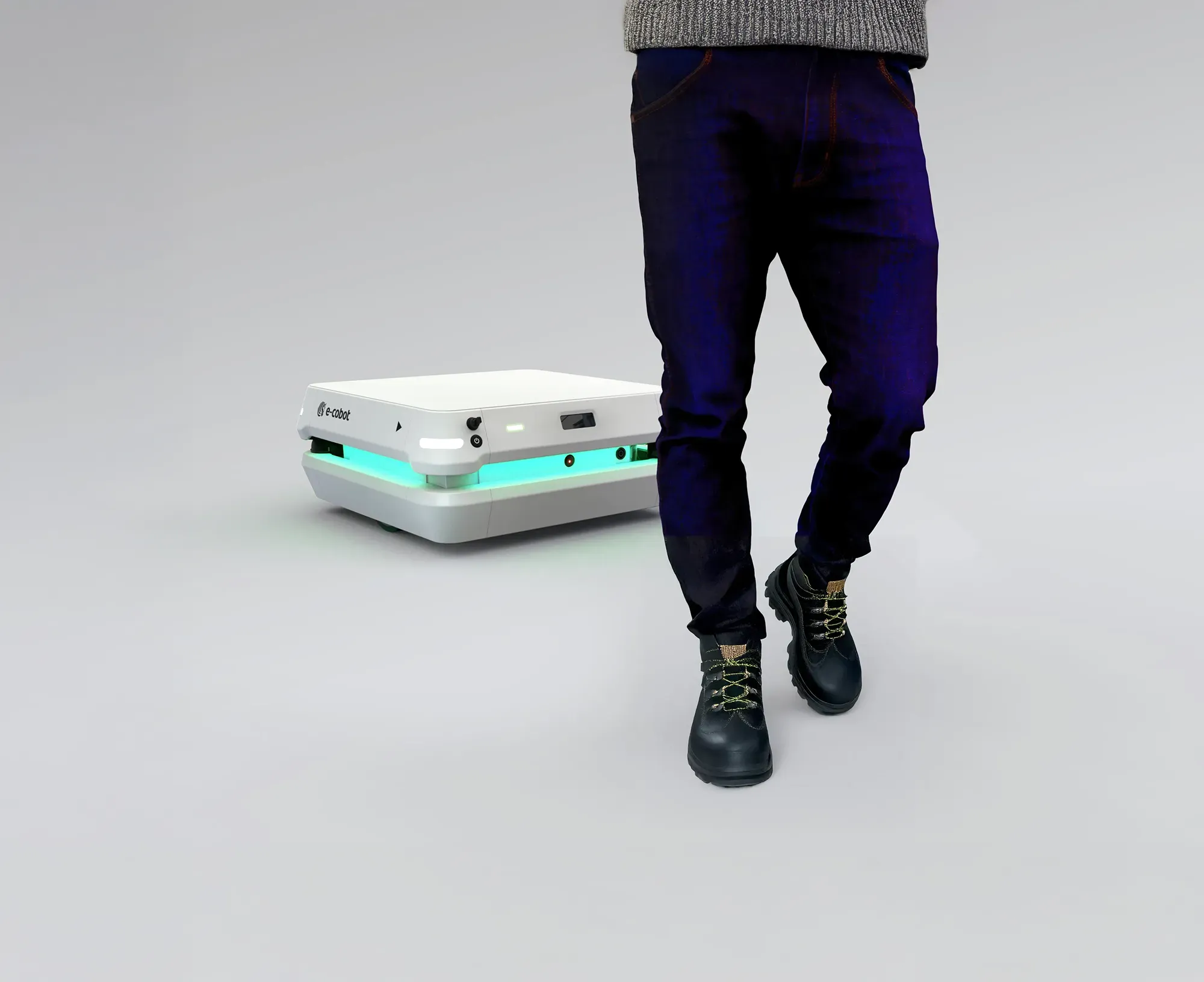
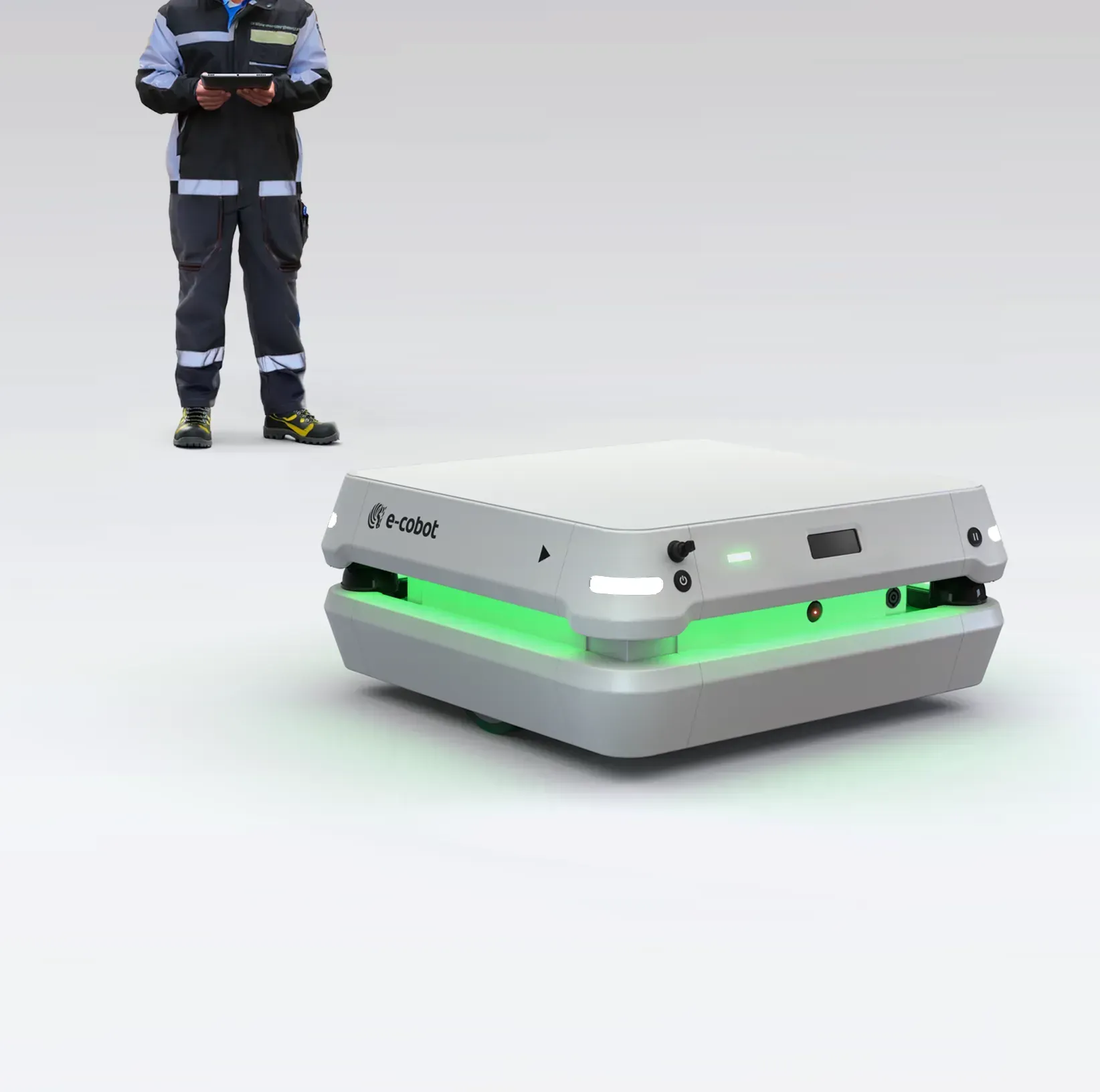
The robot follows an operator at a constant distance, using its LIDAR and camera to detect and track the target. The operator keeps their hands free to pick, store or inspect; the AMR carries the load. This mode is particularly suited to order picking in dense areas and to mobile maintenance. The following distance and speed are configurable depending on the environment.
for exceptional cases
Remote control mode for
exceptional cases
The operator takes direct control of the robot via a wireless remote or a tablet. Used for initial installation (first movement on site, supervised mapping), for precision manoeuvres in areas not covered by the map, for occasional movements outside a planned mission, or for operator training. Remote control mode respects the same safety limits as the autonomous modes; the LIDAR protection zones remain active at all times.
Localization and navigation algorithms
This is the most demanding part of an AMR, and the one where E-COBOT chose to invest in proprietary development rather than relying on a third-party black box.
SLAM: simultaneous localization and mapping
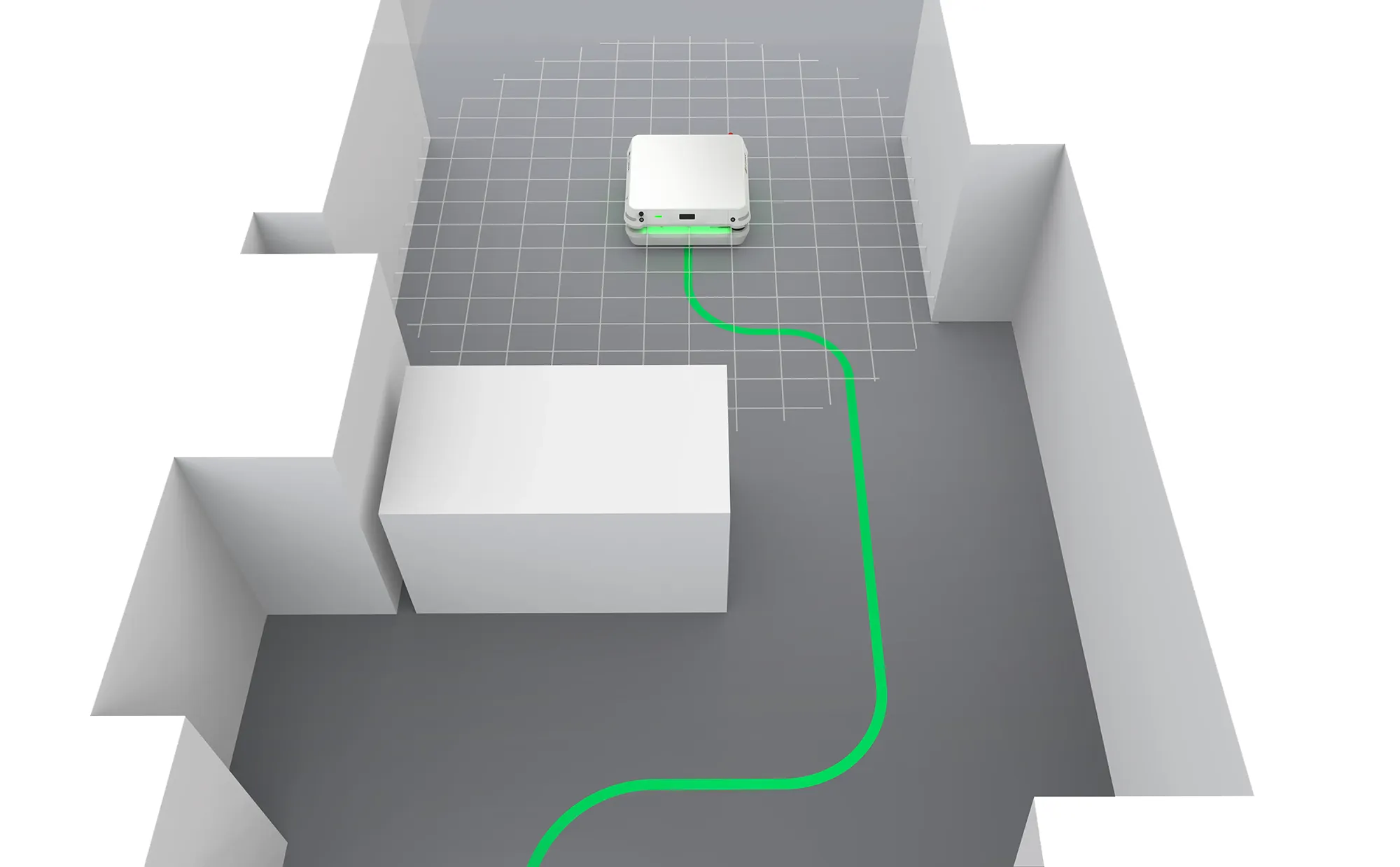
When an AMR is deployed for the first time on your site, it does not know the building. It has to discover it. SLAM is the family of algorithms that lets the robot do two things simultaneously: build a map of the environment and locate itself within that map, in real time, while moving.
Our SLAM implementation relies on a fusion of LIDAR, camera and IMU data, with a continuous correction loop that detects drift between the estimated position and the actual position. The map is not built once and for all; it is updated continuously as the environment changes (a pallet that has been moved, a forklift parked differently). This makes the AMR resilient to the unpredictable pace of a real production environment.
Path planning and obstacle avoidance
Once the robot knows where it is, the next question is: how to reach the destination, given everything else that is happening? Our planner combines a global layer (A* on the persistent map) and a local layer (Dynamic Window Approach on the current sensor reading). The global plan is recalculated at the start of each mission. The local plan adjusts every 100 milliseconds according to detected obstacles: a forklift entering the aisle, an operator crossing the passage, a pallet placed in an unplanned location.
This two-layer approach allows our AMRs to navigate environments shared with humans and forklifts, without stopping for every minor unexpected event.
Why algorithms developed in-house?
It is possible to deploy an AMR with ready-to-use third-party SDKs. We made the opposite choice. Three reasons:
- Fine tuning: Each industrial environment has its own specifics (magnetic interference near welding cells, reflective surfaces in cleanrooms, lighting variations in warehouses). Mastering the algorithm lets us adapt it to your context without depending on a supplier.
- Performance: A black-box SDK is optimized for the median case. Our implementation can be fine-tuned for the difficult cases, and this shows in the mission completion rates.
- Continuity: When a third-party SDK changes its commercial terms or its roadmap, your AMR fleet inherits the consequences. With in-house code, you have continuity.
Sensors and hardware architecture
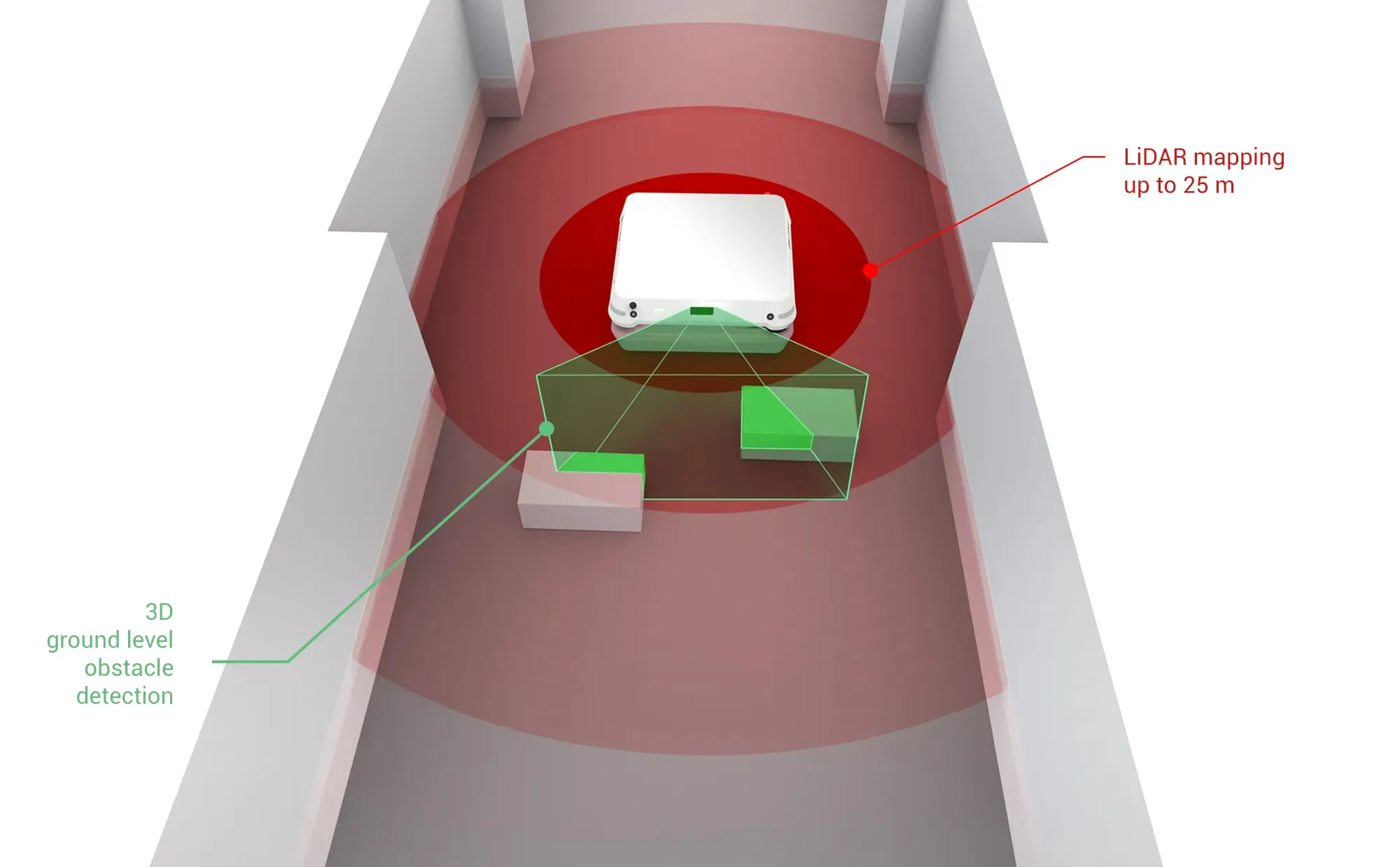
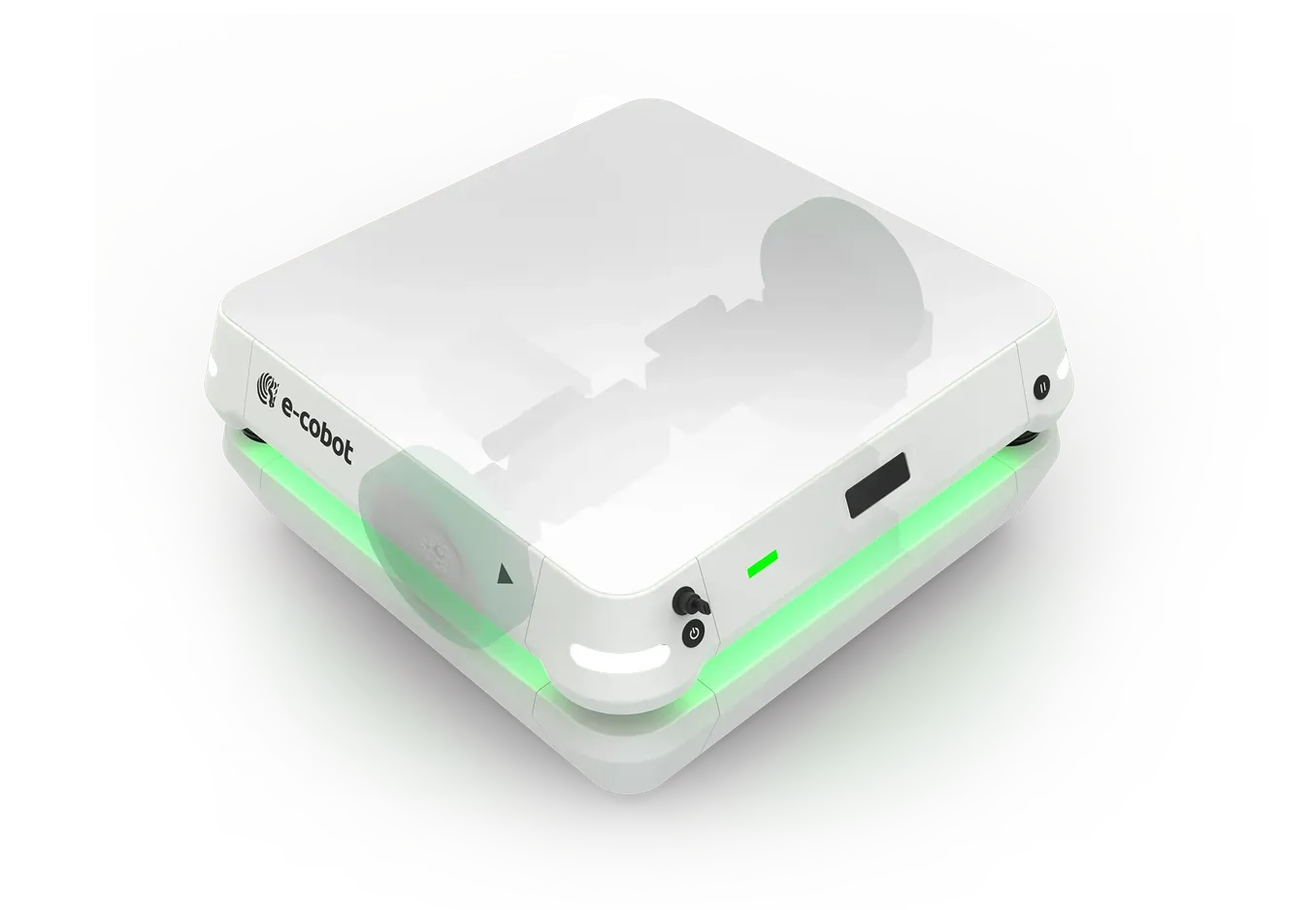
Mapping and obstacle detection
Two-zone detection
The 2D LIDARs continuously monitor two configurable perimeters around the robot. As a human approaches, the robot slows down then stops, and signals its presence with light beacons.
AMRs carry sensors certified to ISO 3691-4, the standard for driverless industrial trucks: 2D LIDAR with configurable detection zones, emergency stops, audible and visual warning devices. This is not optional — any AMR operating in a shared space must meet this standard, and our certification process guarantees it for every deployed unit.
VDA 5050 compliance: multi-brand interoperability
What is VDA 5050?
VDA 5050 is an open communication standard, originally developed by the German Automotive Industry Association (VDA), which defines how autonomous mobile robots communicate with a fleet management system. It standardizes order assignment, status reporting and error handling between AMRs of different brands.
Before VDA 5050, integrating AMRs from two different suppliers required custom middleware for each brand, and managing a heterogeneous fleet was expensive and remained fragile. With VDA 5050, any compliant AMR can be controlled by any compliant fleet manager.
Why does it matter for mixed fleets?
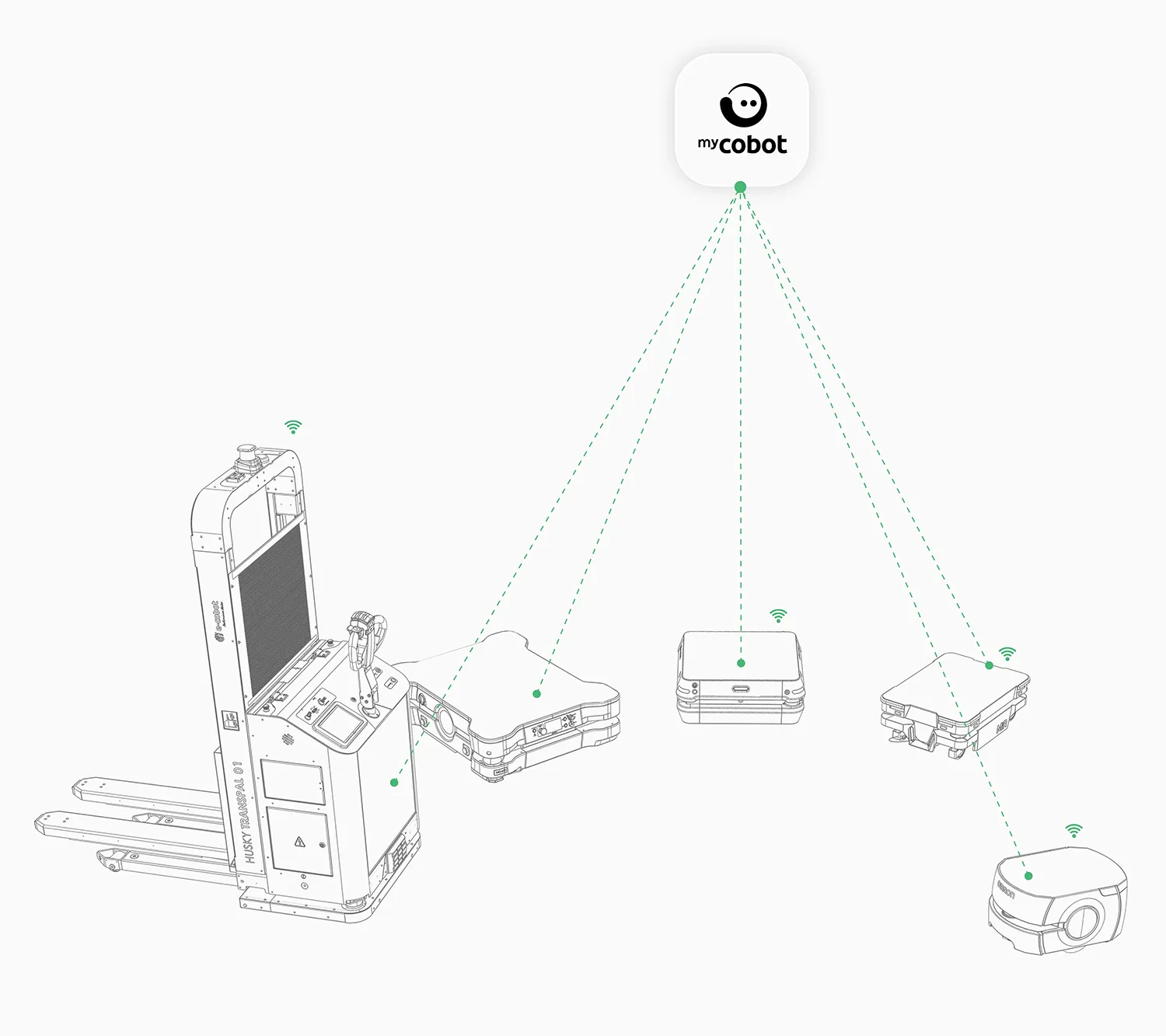
If your site runs AMRs from several suppliers, for example MiR for transport and E-COBOT for tugging, VDA 5050 is what allows a single fleet manager to orchestrate them. Without it, you are locked into a single supplier’s ecosystem, and the cost of switching becomes prohibitive.
This is one of the reasons VDA 5050 adoption is accelerating. Industrial buyers do not want to commit irrevocably to a single AMR brand for the coming decade.
How does E-COBOT implement VDA 5050?
Our HSK range is fully VDA 5050 compliant, which means two things in practice. On the one hand, our AMRs can be controlled by any VDA 5050-compliant fleet manager — yours, ours MyCobot Suite or a third party’s. On the other hand, our fleet manager MyCobot Suite can control any VDA 5050-compliant AMR, not only ours.
On-board AI: edge intelligence
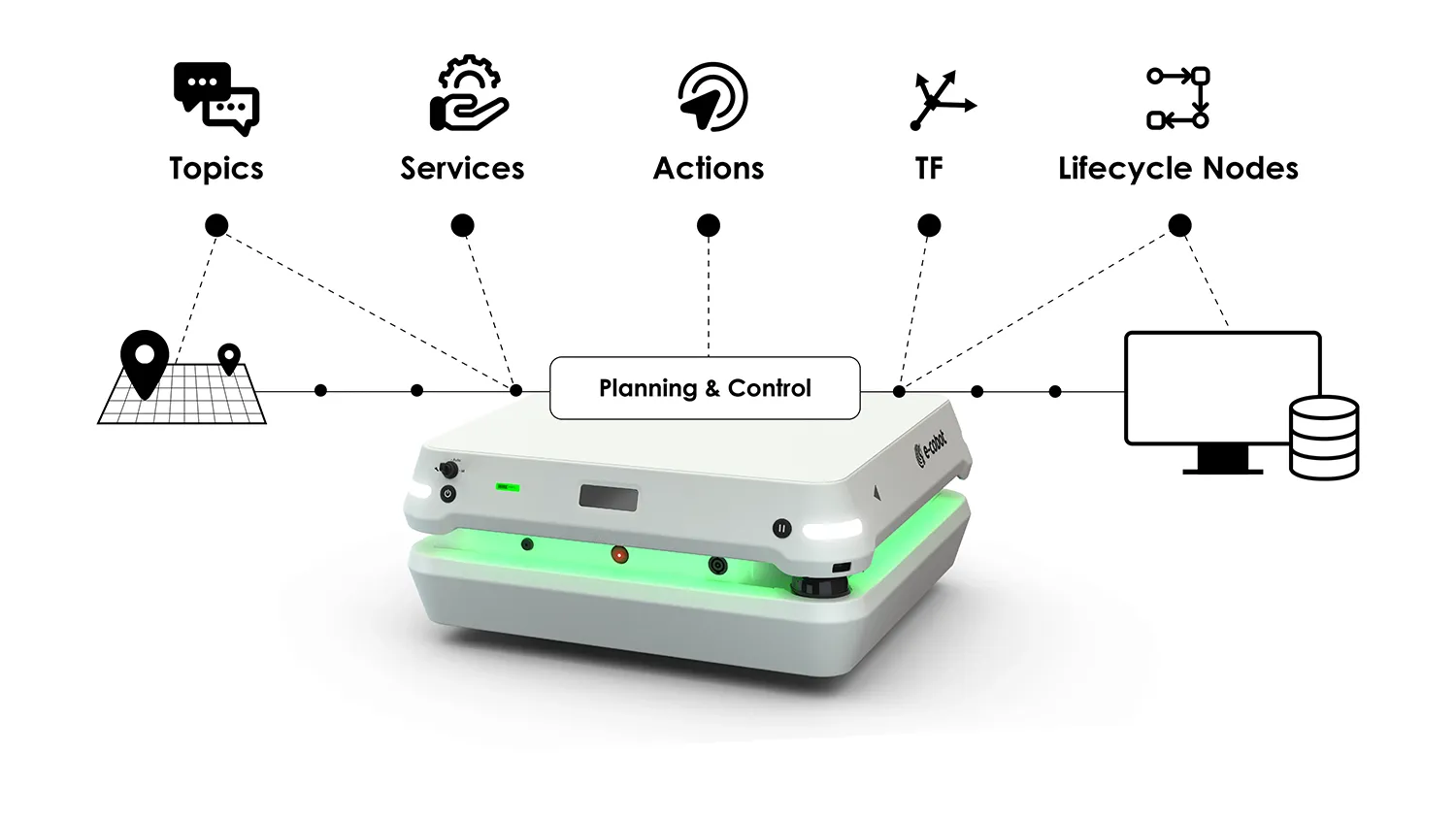
Our software stack is built on ROS 2 (Robot Operating System 2), the de facto open-source standard for modern robotics. ROS 2 brings real-time guarantees, built-in safety primitives and a mature ecosystem of compatible libraries — improvements over ROS 1 that matter for industrial use.
All critical decisions (safety, navigation) run on the AMR itself, not in the cloud. This is non-negotiable: a forklift crossing the AMR's path must be detected and avoided within a few milliseconds, without any network latency being able to interfere. Our edge architecture guarantees this.
Made in France
Why Made in France matters for AMR technology
Hardware sourcing
and quality control
Our HSK robot range is designed and assembled in France, with components sourced from a network of selected suppliers, mostly European. This is not a marketing argument: it directly affects supply-chain reliability, quality consistency, and our ability to honour a 12-month warranty.
Software
sovereignty
The localization and navigation algorithms (the most strategic part of an AMR) are developed and maintained by E-COBOT engineers in France. No foreign supplier can change the licensing terms or restrict access to the source code. For industries with sovereignty stakes (defence, aerospace, critical infrastructure), this matters.
After-sales service
across Europe
Our team of around thirty people operates from Carquefou, near Nantes, with the capacity to intervene across continental Europe. Same-day phone support in French and English.
Our HSK robot range powered by this technology
Every model in the HSK range runs on the same underlying technology platform, optimized for a specific use case:
Technology alone isn’t enough.
A high-performance AMR doesn’t deploy itself. Our team supports your project from Lean audit to commissioning: workflow analysis, simulation, multi-brand robot selection, WMS/ERP integration and team training.
Frequently asked questions
Yes, with planning. We have deployed several mixed fleets where the AGVs handle the fixed, high-volume routes and the AMRs handle the dynamic missions. Coordination happens at the fleet-manager level, typically through zone or time-window partitioning.
Depending on the payload and usage cycle, between 8 and 10 hours of operation per charge. All HSK models support automatic recharging at charging stations during idle periods, which extends effective availability to 22-24 hours a day.
Our local path planner runs at 10 Hz, recalculating the immediate trajectory based on the latest LIDAR scan. When a forklift enters the AMR's planned path, the AMR slows down, evaluates the alternatives, then reroutes or yields depending on the situation.
Our software is built on the open-source ROS 2 framework, but our proprietary algorithms (SLAM, path planning, fleet orchestration) are commercial and remain the intellectual property of E-COBOT. This is the same model as most industrial robotics suppliers.
Initial mapping and configuration of an AMR in a new environment typically take 1 to 3 days, depending on the size of the site. Production deployment with full operator training adds 2 to 4 weeks. Total: 3 to 6 weeks between delivery and operational use.
Three categories: highly reflective environments (for example mirror-polished surfaces) that disturb the LIDAR; environments with extreme temperatures or chemical exposure beyond the robots' certified operating range; and environments with very high human density where social acceptability becomes the limiting factor. We discuss these constraints during the audit phase.
Let's talk about your AMR project
If you are evaluating AMRs for your site, the next step is a technical conversation. Our engineers will go through your environment, your constraints and the integration questions that matter for your project with you.